THE DAILY PRAETORIAN: Cybersecurity Trends – 12/10/25

THE DAILY PRAETORIAN: Cybersecurity Trends – 12/10/25

Image Credit: iStock / Laura Simpson | Imagery Disclaimer

Securing Tomorrow: Your Daily Dose of Cyber Safety, Tech Trends, National Security News, and Inspiration.

“Damn the torpedoes, Full speed ahead!”


-Admiral David Glasgow Farragut

I. National Security: Key developments in national security, particularly cyber and technological warfare.

  • Could battleships really make a comeback?

  • Battleships once defined naval dominance, but the rise of carrier‑based aviation and long‑range missiles rendered their massive guns ineffective, while smaller, cheaper ships could fulfill the same roles with greater flexibility; repeated efforts to modernize Iowa‑class vessels or create “arsenal ships” proved prohibitively expensive and strategically marginal, prompting the U.S. Navy to shift its focus to carriers, submarines, and destroyers. Click here to read more.

II. Tech Trends: Updates on emerging technology trends shaping the digital world.

  • Big Tech joins forces with Linux Foundation to standardize AI agents

  • Big Tech firms are teaming with the Linux Foundation to create the AI Agent Interoperability Framework (AAIF), aiming to standardize how autonomous AI agents communicate and behave. Central to the effort is the Model Context Protocol (MCP), an open‑source protocol adopted by projects like Goose—a customizable coding agent from Block—and AGENTS.md, a markdown‑based readme system introduced by OpenAI to shape agent actions predictably. While the rapid infusion of generative AI into products has left the industry uncertain about the best technical paths—especially around foundational pieces such as OAuth—the consortium, backed by Amazon, Google, Cloudflare, Microsoft and others, hopes to provide neutral, interoperable standards that keep innovation open and portable. Click here to read more.


III. Inspiration: Articles centered on faith that offer guidance and reflection.

  • Atheist-Turned-Christian Filmmaker Makes the Case for God in New Documentary

  • Michael Ray Lewis, once an outspoken atheist, recounts his three‑year journey to Christianity in the new documentary Universe Designed, released on home video Dec. 13. The film blends personal testimony with interviews from prominent apologists such as Frank Turek, Hugh Ross, and J. Warner Wallace, examining the origins of the universe, philosophical truths, and the historical case for Jesus. Aimed at skeptics who doubt faith and at believers seeking stronger apologetic tools, the 90‑minute piece intentionally hides its Christian framing for the first twenty minutes to invite open‑minded viewers to consider the evidence. Click here to read more.
     

IV. Cyber Safety: A focus on the latest cybersecurity threats, tips, or breaches impacting individuals and organizations.

  • OpenAI warns “high” cybersecurity risk posed by new AI models

  • OpenAI cautioned that its forthcoming AI models could present a “high” cybersecurity risk, warning they might autonomously generate zero‑day exploits or aid sophisticated intrusion campaigns against well‑protected systems. To mitigate these threats, the company is bolstering defensive model capabilities, tightening access controls, hardening infrastructure, and enhancing monitoring, while also planning a tiered‑access program for qualified cyber‑defense users. Additionally, OpenAI will launch a Frontier Risk Council composed of seasoned security experts to guide its efforts on cybersecurity and later expand to other emerging technology domains. Click here to read more.

V. Shield of Israel: Coverage from The Jerusalem Post, providing an Israeli perspective on ongoing conflicts.

  • New Middle East’s rise: Saudi-Israel alignment will reshape regional hegemony – opinion

  • A growing Saudi‑Israeli partnership is poised to reshape Middle Eastern power dynamics as Iran’s theocratic regime weakens, with both nations leveraging covert intelligence ties, the Abraham Accords and shared security concerns to counter Tehran’s dwindling influence and proxy networks; this alignment, supported by regional leaders like Crown Prince Mohammed bin Salman and Israeli officials, aims to foster a stable post‑Iran order while marginalizing rivals such as Qatar, whose ties to Tehran are expected to fade. Click here to read more.

     
THE DAILY PRAETORIAN: Cybersecurity Trends – 12/9/25

THE DAILY PRAETORIAN: Cybersecurity Trends – 12/9/25

Image Credit: U.S. Department of War (DoW) / Air Force Staff Sgt. Gerald R. Willis | Imagery Disclaimer

Securing Tomorrow: Your Daily Dose of Cyber Safety, Tech Trends, National Security News, and Inspiration.

“Air power is, above all, a psychological weapon–and only short-sighted soldiers, too battle-minded, underrate the predominance of psychological factors in war.”


-B.H. Liddell Hart

I. National Security: Key developments in national security, particularly cyber and technological warfare.

  • F/A-18 Super Hornets Were Just Tracked Flying Deep Inside The Gulf Of Venezuela

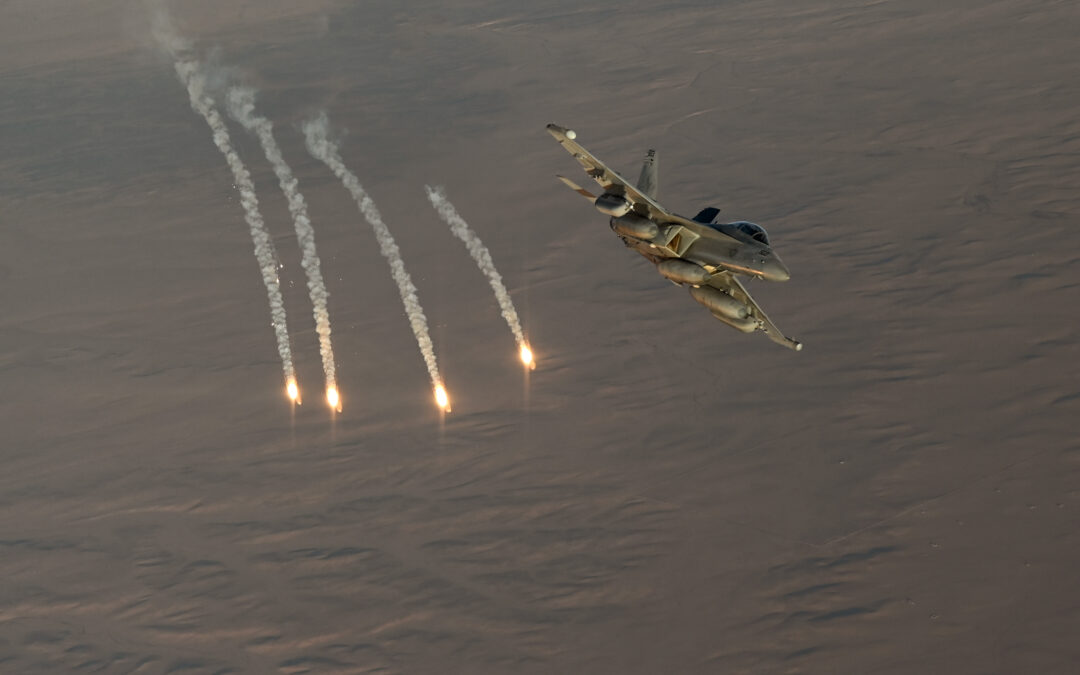
  • U.S. Navy F/A‑18E/F Super Hornets—designated Rhino 11 and Rhino 12—were tracked loitering for roughly 40 minutes over the Gulf of Venezuela on 9 December 2025, a semi‑enclosed basin that Venezuela asserts as internal waters despite the United States’ longstanding claim that the narrow northern mouth remains international airspace. Operating from the carrier USS Gerald R. Ford, the Super Hornets were accompanied by EA‑18G “Growler” electronic‑warfare aircraft (Grizzly 1 and Grizzly 2), a MQ‑4C Triton maritime‑surveillance drone, and likely additional, non‑publicly‑visible assets, all broadcasting their positions to convey a deliberate show of force. The mission appears calibrated to probe and stress‑test Venezuelan air‑defence networks, gather electronic order‑of‑battle data, and reinforce the broader U.S. pressure campaign against President Nicolás Maduro—an effort framed publicly as counter‑narcotics (Operation Southern Spear) but increasingly interpreted as a prelude to more kinetic options. This sortie follows a sustained buildup of roughly 15 000 U.S. personnel and numerous naval and aerial platforms in the Caribbean, underscoring Washington’s willingness to intensify coercive measures, including potential strikes, against the Maduro regime. Click here to read more.

II. Tech Trends: Updates on emerging technology trends shaping the digital world.

  • Holy slop: most pastors now use AI to write sermons

  • Recent surveys of 594 pastors and church staff reveal that nearly two‑thirds now incorporate artificial‑intelligence tools—most commonly ChatGPT—into their sermon‑writing workflow, with 61 % using AI weekly or daily and a quarter doing so every day. While clergy appreciate AI’s ability to streamline research, generate outlines, and draft communications, many express unease about the reliability of theological content, the risk of misinformation, and the possibility that algorithmic assistance could erode personal pastoral guidance. The Vatican acknowledges technology’s role in humanity’s creative partnership with God yet warns that AI’s misuse, especially in contexts like warfare, could jeopardize regional stability and even human survival. Click here to read more.


III. Inspiration: Articles centered on faith that offer guidance and reflection.

  • ‘You’re Not a Cosmic Accident’: Unique Creation Museum Reveals Where Faith and Science Meet

  • The Wonders Center & Science Museum—also called the Unique Creation Museum—just outside Nashville showcases a 100,000‑square‑foot complex that presents scientific topics such as astronomy, paleontology, physics and zoology through a literal‑creation lens, emphasizing that the natural world reflects intentional design by God. Founder David Rives highlights interactive exhibits ranging from a “Wonders of Africa” habitat with lifelike animal displays to a planetarium ranked among the world’s top ten, a Tesla‑coil lightning show, and hands‑on physics demonstrations like the Bernoulli principle. He also integrates his personal passions—fossil digs, astrophotography, and research on the Dead Sea Scrolls—to illustrate how scientific inquiry can reinforce biblical truth, repeatedly urging visitors to view every element of creation, from a blade of grass to a 50‑foot marine reptile fossil, as evidence that humanity is not a cosmic accident but purposefully made by a Creator. Click here to read more.
     

IV. Cyber Safety: A focus on the latest cybersecurity threats, tips, or breaches impacting individuals and organizations.

  • US Posts $10 Million Bounty for Iranian Hackers

  • The United States has announced a rewards program offering up to $10 million for information leading to the identification or apprehension of members of the Iranian state‑affiliated hacking collective now labeled “Shahid Shushtari”—formerly known as Emennet Pasargad, Cotton Sandstorm, Marnanbridge and Haywire Kitten. According to U.S. officials, the group operates under the Islamic Revolutionary Guard Corps Cyber‑Electronic Command (IRGC‑CEC) and has been active since at least 2020, conducting cyber‑espionage, sabotage and influence campaigns against critical infrastructure in the United States, Europe and the Middle East, including attacks on the 2024 Summer Olympics and a U.S. IPTV provider, as well as meddling in the 2020 U.S. election. The Treasury has identified Mohammad Bagher Shirinkar as the organization’s leader and Fatemeh Sedighian Kashi as a senior operative tied to its front companies. Anyone with actionable intelligence is urged to submit tips via the Rewards for Justice Tor‑based reporting channel. Click here to read more.

V. Shield of Israel: Coverage from The Jerusalem Post, providing an Israeli perspective on ongoing conflicts.

  • ‘This is significant’: Danon says Waltz’s Israel visit reflects Washington’s commitment to region

  • U.S. Ambassador to the United Nations Mike Waltz made Israel and Jordan the focus of his inaugural overseas trip, a move Israel’s UN envoy Danny Danon framed as a concrete demonstration of Washington’s commitment to Middle‑East security. During the visit Waltz toured border outposts along the Lebanon, Syria and Gaza fronts, inspected a U.S. base in Kiryat Gat, and met with Israeli officials and the family of Ran Gvili, the last Israeli hostage still held in Gaza. Danon highlighted Waltz’s military background as giving him “firsthand” insight into threats from Hezbollah and Hamas, and praised his outspoken defense of Israel at the Security Council. The ambassador also reiterated U.S. support for the release of all hostages and for a post‑hostage peace framework outlined in President Trump’s plan. Click here to read more.


     
THE DAILY PRAETORIAN: Cybersecurity Trends – 12/8/25

THE DAILY PRAETORIAN: Cybersecurity Trends – 12/8/25

Image Credit: U.S. Department of War (DoW) / Navy Petty Officer 2nd Class Hannah Kantner | Imagery Disclaimer

Securing Tomorrow: Your Daily Dose of Cyber Safety, Tech Trends, National Security News, and Inspiration.

“Information affects the very fabric of society. It could be the primary weapon in the future of war, and it could determine the future of humanity.”


― Roger Spitz

I. National Security: Key developments in national security, particularly cyber and technological warfare.

  • Navy establishes first-of-its-kind information warfare squadron at Norfolk

  • The U.S. Navy has stood up Information Warfare Squadron Two at Naval Station Norfolk as a four‑year pilot to consolidate and streamline information‑warfare capabilities—ranging from communications, cyber, electronic warfare and cryptology—to better support carrier strike groups, with Capt. Jon O’Connor assuming command and Vice Adm. Mike Vernazza calling the move a “paradigm shift” that will enhance the readiness, lethality and survivability of strike groups like Carrier Strike Group 2 led by the USS Dwight D. Eisenhower. Click here to read more.


II. Tech Trends: Updates on emerging technology trends shaping the digital world.

  • Inside AWS’s plan to use agentic AI to reset legacy IT

  • AWS framed agentic AI as the solution to enterprise technical debt, unveiling services such as Transform, Nova, Nova Forge, Bedrock AgentCore, Frontier Agents and AI Factories that can modernize legacy Windows, .NET, mainframe, VMware and API estates up to five times faster, cut maintenance costs by 70 % and reduce manual effort by hundreds of thousands of hours; the company highlighted real‑world results from Air Canada, QAD and Thomson Reuters, introduced autonomous agents for development, security and DevOps, and emphasized policy controls, multi‑agent orchestration and partner ecosystems to move AI from prototype to production at scale. Click here to read more.


III. Inspiration: Articles centered on faith that offer guidance and reflection.

  • Kevin Costner’s ABC Christmas Special Faithfully Recounts the Nativity Story

  • Kevin Costner narrates “Kevin Costner Presents: The First Christmas,” an ABC holiday special that faithfully follows the biblical Nativity—from the angel’s announcement to Mary through Jesus’ birth, the temple encounter with Simeon and a portrayal of the Wise Men visiting a young child—while interspersing reenactments filmed in Morocco with interviews from biblical scholars; the program, described by director David L Cunningham as a “Walt Disney‑style” retelling, also includes scenes of Herod’s massacre, Costner’s personal testimony of faith and a call to focus on Jesus’ purpose and kingdom. Click here to read more.
     

IV. Cyber Safety: A focus on the latest cybersecurity threats, tips, or breaches impacting individuals and organizations.

  • Chinese Hackers Exploiting React2Shell Vulnerability

  • Threat actors linked to China—specifically the Earth Lamia and Jackpot Panda groups—began probing for the newly disclosed React2Shell vulnerability (CVE‑2025‑55182) within hours of its public disclosure, using specially crafted HTTP requests to achieve unauthenticated remote code execution on vulnerable React 19 servers; AWS reported active exploitation attempts, noted that some attackers were testing fake proof‑of‑concept exploits while others were debugging real exploits, and released indicators of compromise to help organizations detect the attacks, which affect a large portion of web applications given React’s widespread use. Click here to read more.

V. Shield of Israel: Coverage from The Jerusalem Post, providing an Israeli perspective on ongoing conflicts.

  • Israeli start-up InfiniDome brings GPS jamming protection to modern battlefields

  • Israeli start‑up InfiniDome, founded in 2016 and now employing about 30 people in Israel and the United States, specializes in GNSS protection that shields drones, loitering munitions and other autonomous platforms from GPS jamming and spoofing—techniques that overwhelm or falsify satellite signals—by inserting modules between antennas and receivers that activate only when interference is detected; the company’s Aura product line, available in boxed and lightweight integration versions, has been fielded in recent conflicts against Hamas, Hezbollah and Iran, and is expanding into North America and Europe despite geopolitical backlash against Israeli arms sales. Click here to read more.

     
THE DAILY PRAETORIAN: Cybersecurity Trends – 12/4/25

THE DAILY PRAETORIAN: Cybersecurity Trends – 12/4/25

Image Credit: iStock / dreamextreme | Imagery Disclaimer

Securing Tomorrow: Your Daily Dose of Cyber Safety, Tech Trends, National Security News, and Inspiration.

“Speak softly and carry a big stick—you will go far.”


-Theodore Roosevelt

I. National Security: Key developments in national security, particularly cyber and technological warfare.

  • American support for larger US military and NATO grows, survey says

  • A new Ronald Reagan Institute poll shows record‑high American backing for a dominant U.S. military and strong international leadership, with 64 % of respondents wanting the United States to lead global affairs, 87 % saying the country should maintain the world’s most powerful armed forces, and 68 % supporting NATO; the survey also found bipartisan consensus on security issues—62 % favor Ukraine’s victory, 60 % would back U.S. forces defending Taiwan, and 62 % support using the military against suspected drug traffickers in the Caribbean—while revealing sharp partisan splits on social‑policy matters. Click here to read more.


II. Tech Trends: Updates on emerging technology trends shaping the digital world.

  • FCC approves AT&T $1 billion purchase of spectrum from UScellular

  • The FCC cleared AT&T’s $1.02 billion purchase of spectrum licenses from UScellular after the Texas carrier pledged to terminate its diversity, equity and inclusion (DEI) programs, a condition the agency has imposed on telecom mergers since President Trump returned to office; while AT&T said it will have no DEI‑focused roles, the Rural Wireless Association warned the deal could worsen consolidation, raise rates and hurt rural customers, echoing similar FCC approvals for Verizon’s $20 billion Frontier acquisition and T‑Mobile’s $4.4 billion UScellular deal after DEI cuts. Click here to read more.


III. Inspiration: Articles centered on faith that offer guidance and reflection.

  • ‘The Pulpit Has Become Quiet’: Jerusalem Hosts 1,000 Pastors to Support Jewish State, Combat Antisemitism

  • Over a thousand pastors and Christian influencers gathered in Jerusalem through a partnership between Israel’s Ministry of Foreign Affairs and the Friends of Zion Museum, with U.S. Ambassador to Israel Mike Huckabee and Friends of Zion founder Mike Evans urging participants to become “ambassadors” who combat rising antisemitism and promote a biblical view of Israel; the event highlighted concerns about an “ideological war” against Israel, referenced the Nova Music Festival massacre, and announced a 2026 plan to reach a million pastors and churches worldwide to reinforce support for the Jewish state. Click here to read more.
     

IV. Cyber Safety: A focus on the latest cybersecurity threats, tips, or breaches impacting individuals and organizations.

  • Engineer proves that Kohler’s smart toilet cameras aren’t very private

  • Kohler’s $599 Dekoda smart‑toilet camera, which streams health data to a subscription‑based app, claims “end‑to‑end encryption” but actually decrypts the footage on Kohler’s servers for processing, meaning the company can access the recordings; engineer and former FTC advisor Simon Fondrie‑Teitler highlighted that the term is being misused—E2EE traditionally protects data from the service provider—while Kohler’s privacy policy states it may de‑identify and use the data to train AI models, raising concerns about the true privacy of a device that records intimate bathroom activity. Click here to read more.

V. Shield of Israel: Coverage from The Jerusalem Post, providing an Israeli perspective on ongoing conflicts.

  • ‘Invade Iran or accept talks,’ ex-Israeli Air Force chief warns

  • Former Israeli Air Force commander Maj‑Gen. (ret.) Eitan Ben Eliyahu warned that Israel now faces only two realistic options regarding Iran—launch a full‑scale war, including a ground invasion, or rely on intensified economic pressure and renewed negotiations—after Operation Rising Lion in June delayed but failed to eliminate Iran’s nuclear program, prompting Tehran to adapt by improving missile accuracy, dispersing launch sites and enhancing surprise capabilities; he also cautioned that any broader Israeli action in Lebanon could jeopardize the existing agreement unless Hezbollah disarms and withdraws from the south. Click here to read more.

     
THE DAILY PRAETORIAN: Cybersecurity Trends – 12/3/25

THE DAILY PRAETORIAN: Cybersecurity Trends – 12/3/25

Image Credit: iStock / Olena Bartienieva | Imagery Disclaimer

Securing Tomorrow: Your Daily Dose of Cyber Safety, Tech Trends, National Security News, and Inspiration.

“At a time like this, scorching irony, not convincing argument, is needed.”


-Frederick Douglass

I. National Security: Key developments in national security, particularly cyber and technological warfare.

  • U.S. Deploys Shahed-136 Clones To Middle East As A Warning To Iran

  • The U.S. has activated Task Force Scorpion Strike, a special‑operations unit equipped with Low‑Cost Uncrewed Combat Attack System (LUCAS) drones—reverse‑engineered from Iran’s Shahed‑136 and built by Arizona firm SpektreWorks—for the first time in the Middle East, fielding about two dozen troops and a swarm‑capable, $35 k platform that can be launched from catapults, rockets or vehicles and operate beyond line of sight; officials say the unit is intended to “flip the script” on Iran and its proxies, providing a scalable, low‑cost strike capability that could also be used against Houthi forces and other regional threats while paving the way for broader U.S. adoption of similar kamikaze drones. Click here to read more.


II. Tech Trends: Updates on emerging technology trends shaping the digital world.

  • It works on its own: Amazon introduces three new AI agents

  • Amazon Web Services unveiled three “frontier” AI agents at re:Invent 2025—Kiro AI, which can autonomously handle development tasks for days by interpreting high‑level goals, generating code across multiple repositories, testing and creating pull requests while learning from existing code; an AWS Security Agent that spots vulnerabilities during coding and suggests fixes; and a DevOps Agent that resolves and prevents incidents to improve system reliability and performance, all designed to operate with minimal human supervision. Click here to read more.


III. Inspiration: Articles centered on faith that offer guidance and reflection.

  • ‘Nothing but a Miracle’: Cops Save Unconscious Man From Burning Car With Seconds to Spare

  • South Brunswick, New Jersey police officers Yash Shroff and Thomas Sites rescued an unconscious 26‑year‑old driver, Safwan Islam, from a burning car after his vehicle crashed into a tree and ignited; the officers smashed a window, pulled him out just before the car erupted in flames, and his father called the rescue “nothing but a miracle,” with Islam expected to make a full recovery. Click here to read more.
     

IV. Cyber Safety: A focus on the latest cybersecurity threats, tips, or breaches impacting individuals and organizations.

  • Chrome, Edge Extensions Caught Tracking Users, Creating Backdoors

  • A threat actor known as ShadyPanda has been publishing malicious Chrome and Edge extensions for about seven years, amassing over 4 million downloads and using the add‑ons to inject affiliate‑tracking code on sites like eBay, Amazon and Booking.com, log browsing data via Google Analytics, read cookies and capture search‑box inputs, and then exfiltrate the information to remote servers; after initially posing as harmless tools, the extensions were later updated to act as a remote‑code‑execution backdoor that checks an external server hourly and can run arbitrary JavaScript, allowing the attacker to pivot to ransomware, credential theft or espionage, prompting Google and Microsoft to remove the offending extensions from their stores. Click here to read more.

V. Shield of Israel: Coverage from The Jerusalem Post, providing an Israeli perspective on ongoing conflicts.

  • Israel, Lebanon hold first senior-level talks in decades as US pushes engagement

  • Israeli Deputy Head of the Foreign Policy Division Uri Reznik met in Nakura, Lebanon, with U.S. Lebanon‑affairs adviser Morgan Ortagus and Lebanese civilian envoy Simon Karam—an anti‑Hezbollah lawyer and former ambassador—to hold the first senior‑level Israel‑Lebanon talks since the 1991 Madrid conference; the parties said the meeting was positive, discussed ideas for future economic cooperation, and pledged to reconvene, while Israel reiterated that Hezbollah’s disarmament remains a prerequisite for any further progress. Click here to read more.

     
THE DAILY PRAETORIAN: Cybersecurity Trends – 12/2/25

THE DAILY PRAETORIAN: Cybersecurity Trends – 12/2/25

Image Credit: iStock / SweetBunFactory | Imagery Disclaimer

Securing Tomorrow: Your Daily Dose of Cyber Safety, Tech Trends, National Security News, and Inspiration.

“Be studious in your profession, and you will be learned. Be industrious and frugal, and you will be rich. Be sober and temperate, and you will be healthy. Be in general virtuous, and you will be happy.”


-Benjamin Franklin

I. National Security: Key developments in national security, particularly cyber and technological warfare.

  • How America can outproduce and outlast adversaries

  • The ReForge Commission, co‑chaired by Deputy Secretary of Defense Kathleen Hicks and former House Armed Services Committee chair Mac Thornberry, aims to revitalize America’s industrial base—spanning critical minerals, advanced manufacturing, energy, logistics, software and the broader innovation ecosystem—so the nation can outproduce and outlast adversaries, with a three‑pillar approach that (1) assesses current security‑driven demand, (2) crafts a resilient, software‑driven supply‑chain and manufacturing strategy, and (3) aligns incentives to draw innovation, capital and talent into defense before crises force rapid mobilization. Click here to read more.


II. Tech Trends: Updates on emerging technology trends shaping the digital world.

  • OpenAI CEO declares “code red” as Gemini gains 200 million users in 3 months

  • OpenAI’s CEO Sam Altman issued a “code red” warning as Google’s Gemini app surged to 650 million monthly active users—up from 450 million in July—closing the gap with ChatGPT’s 800 million weekly users, while OpenAI grapples with a $1 trillion cloud‑computing bill and no profit‑generating ad revenue, prompting the company to seek fresh capital, stake investments and a partnership with Accenture even as it prepares to launch a new reasoning model that could outpace Gemini 3. Click here to read more.


III. Inspiration: Articles centered on faith that offer guidance and reflection.

  • US military becoming more religious as nation remains more secular: study

  • A new analysis of Cooperative Election Study data shows that weekly church attendance among active‑duty U.S. service members rose from 21 % in 2010‑12 to 28 % in 2022‑24, with 45 % attending at least once a week, while civilian attendance stayed flat at 16 % and overall importance of religion among military personnel increased to 44 % versus a decline to 30 % among civilians; researchers attribute the gap to selection effects, noting that the all‑volunteer force draws heavily from Southern states that tend to be more religiously active. Click here to read more.
     

IV. Cyber Safety: A focus on the latest cybersecurity threats, tips, or breaches impacting individuals and organizations.

  • Cricket Wireless nationwide retailer, MobilelinkUSA, claimed by DragonForce ransomware

  • DragonForce, a Russian‑linked ransomware cartel that recently allied with Qilin and a revived LockBit, has claimed to have exfiltrated over 5 TB of data from Mobilelink USA—the largest authorized Cricket Wireless dealer operating 550 stores across 21 states—and posted a six‑day countdown on its dark‑web leak site demanding payment before publishing the data, which could expose millions of customers’ personally identifiable and financial information; the gang, which has attacked 185 victims in 2025, is also linked to high‑profile breaches of UK retailers, Marks & Spencer and others, and is known for “hostile takeovers” of rival ransomware groups. Click here to read more.

V. Shield of Israel: Coverage from The Jerusalem Post, providing an Israeli perspective on ongoing conflicts.

  • ‘Hezbollah disarms or Israel acts’: Netanyahu, Ortagus meet as Israel-Lebanon tensions flare

  • Israeli Prime Minister Benjamin Netanyahu met with U.S. Lebanon‑affairs envoy Morgan Ortagus, Defense Minister Israel Katz and IDF Intelligence Chief Maj. Gen. Shlomi Binder to discuss escalating border tensions as Hezbollah’s ranks and missile stockpiles grow, warning that without a dramatic change by the end of the cease‑fire period—December 31—another round of fighting in the north is “almost inevitable”; Israeli officials say Lebanon’s government and army are failing to disarm Hezbollah, and the U.S. and Israel plan to reassess options after the deadline, with Ortagus set to convey a stark ultimatum that Hezbollah must disarm or Israel will act. Click here to read more.

     
THE DAILY PRAETORIAN: Cybersecurity Trends – 12/1/25

THE DAILY PRAETORIAN: Cybersecurity Trends – 12/1/25

Image Credit: iStock / Marat Musabirov | Imagery Disclaimer

Securing Tomorrow: Your Daily Dose of Cyber Safety, Tech Trends, National Security News, and Inspiration.

“A Dorito asks nothing of you, which is its great gift.”


-Aimee Bender

I. National Security: Key developments in national security, particularly cyber and technological warfare.

  • Celebrate The Air Force’s Newest ‘Flying Dorito’ With This T-Shirt

  • The new “Waritos” holiday T‑shirt celebrates the B‑21 Raider—nicknamed the “Flying Dorito” for its wedge‑shaped stealth design—by pairing the bomber’s silhouette with a festive graphic, while the limited‑run merch also reissues popular designs like “On A Silent Night,” “Stealthier Things” and “Tonopah Canyons,” all available for a short window before the sale ends on Monday. Click here to read more.


II. Tech Trends: Updates on emerging technology trends shaping the digital world.

  • Oxford’s word of the year is here, and it says everything about the current social media landscape

  • Oxford University Press named “rage bait” its 2025 Word of the Year, defining it as online content deliberately crafted to provoke anger or outrage in order to boost clicks and engagement; the term’s usage has tripled over the past year, reflecting growing awareness of how digital platforms manipulate emotions rather than merely sparking curiosity, while the runners‑up were “biohacking” (self‑experimenting with technology) and “aura farming” (curating a charismatic public persona). Click here to read more.


III. Inspiration: Articles centered on faith that offer guidance and reflection.

  • Biblical “Better to Give than to Receive” Explains Black Friday Burnout

  • The commentary urges readers to resist Black‑Friday consumerism and instead embrace the biblical principle that “it is more blessed to give than to receive,” noting that the holiday shopping frenzy fuels spiritual emptiness and financial stress for many Americans, while generosity—whether through time, service or modest gifts—offers lasting joy and aligns with Jesus’ teachings about storing up heavenly treasure rather than earthly possessions. Click here to read more.
     

IV. Cyber Safety: A focus on the latest cybersecurity threats, tips, or breaches impacting individuals and organizations.

  • Facial Recognition’s Trust Problem

  • Facial‑recognition technology faces a major trust gap because public‑surveillance deployments capture images without consent, store them in opaque databases and have repeatedly proved insecure—examples include Clearview’s GDPR violations, the 2018 Mexico‑City hack that let criminals track FBI informants, and recent breaches of license‑plate‑scanner operators—while access‑control uses are more consensual but still raise privacy concerns; solutions such as ZeroTier’s encrypted mesh networking can isolate camera feeds to prevent lateral hacks, and Alcatraz.ai’s “privacy‑first” approach stores only irreversible facial‑map hashes rather than images, enabling secure, consent‑based authentication without exposing personal biometrics. Click here to read more.

V. Shield of Israel: Coverage from The Jerusalem Post, providing an Israeli perspective on ongoing conflicts.

  • Israeli defense giants climb int’l ranks, record double-digit revenue growth in 2024, report says

  • Israeli defense firms Rafael Advanced Defense Systems, Israel Aerospace Industries and Elbit Systems each posted double‑digit revenue growth in 2024, lifting their combined arms sales by 16 % to $16.2 billion and moving up the Stockholm International Peace Research Institute (SIPRI) Top 100 list—Elbit rose to 25th, IAI to 31st and Rafael to 34th—while the overall Top 100 recorded a record $679 billion in sales, driven by conflicts in Ukraine, Gaza and rising tensions in East Asia, showing that geopolitical backlash over Israel’s Gaza actions has not dampened global demand for its weapons. Click here to read more.

     
THE DAILY PRAETORIAN: Cybersecurity Trends – 11/26/25

THE DAILY PRAETORIAN: Cybersecurity Trends – 11/26/25

Image Credit: iStock / MikeMareen | Imagery Disclaimer

Securing Tomorrow: Your Daily Dose of Cyber Safety, Tech Trends, National Security News, and Inspiration.

“God created war so that Americans would learn geography.”


-Mark Twain

I. National Security: Key developments in national security, particularly cyber and technological warfare.

  • Japan’s Plan To Put SAMs On Strategic Island 70 Miles From Taiwan Could Be Just The Beginning

  • Japan is moving ahead with plans to install medium‑range Chu‑SAM surface‑to‑air missiles on Yonaguni Island—just 70 miles from Taiwan—while Japanese fighters have repeatedly scrambled to intercept Chinese drones near the island, the U.S. Marine Corps has set up a forward arming and refueling point there, and both Tokyo and Washington are bolstering regional defenses amid rising Sino‑Japanese tensions and concerns that the island could become a forward staging site for additional air‑defense and missile systems; Chinese officials have condemned the move as provocative, and the deployment marks a significant escalation in the strategic contest over the first island chain. Click here to read more.


II. Tech Trends: Updates on emerging technology trends shaping the digital world.

  • Plex’s crackdown on free remote streaming access starts this week

  • Plex is tightening its remote‑streaming policy this week, moving away from free, unrestricted access in order to cover rising infrastructure costs, fund new features such as Common Sense Media integration, a bespoke server‑management app and an open API, and boost subscription revenue after nearing profitability and raising $40 million in 2024; the change may push longtime users who rely on Plex as a free media‑server solution toward alternatives like Jellyfin, while the company hopes the new model will satisfy investors and sustain its growth. Click here to read more.


III. Inspiration: Articles centered on faith that offer guidance and reflection.

  • The Pilgrims Brought the Values that Shaped Freedom-Loving America

  • The documentary “The Pilgrims” argues that the 1620 Mayflower settlers forged America’s core values—religious liberty, self‑government and a Bible‑based moral framework—by fleeing England’s enforced Anglicanism, signing the Mayflower Compact as a prototype of democratic rule, forging peaceful treaties with Native Americans, and enduring a brutal first winter that cemented a willingness to die for their faith; the film highlights how those early principles seeded the Declaration of Independence, the Constitution and the nation’s enduring emphasis on freedom, noting that roughly 30 million Americans trace ancestry to the original 51 pilgrims. Click here to read more
     

IV. Cyber Safety: A focus on the latest cybersecurity threats, tips, or breaches impacting individuals and organizations.

  • Asus urges immediate updates: patches released for millions of computers, routers

  • Asus has released urgent patches for a critical privilege‑escalation flaw (CVE‑2025‑59373, severity 8.5) in its preinstalled MyASUS utility that could let low‑privilege attackers execute code as SYSTEM on both ARM and x64 PCs, and also issued firmware updates for its routers to fix an authentication‑bypass issue in AiCloud and other vulnerabilities; users are urged to apply the updates via Windows Update or the Asus support site and to disable internet‑facing services on older, unsupported router models. Click here to read more.

V. Shield of Israel: Coverage from The Jerusalem Post, providing an Israeli perspective on ongoing conflicts.

  • ‘Time to end the Oslo illusion’: Minister Strock says Israel must scrap PA security apparatus

  • National Missions Minister Orit Strock argued that Israel must abandon the Oslo‑era framework and dismantle the Palestinian Authority’s armed security apparatus, condemning PA legislation that pays families of prisoners, its school curriculum that she says incites hatred, and prisons that allegedly serve as safe havens for terrorists, while proposing a return to the pre‑1994 “municipal” model in which Israel retains full civil and security control over the West Bank and only non‑violent Palestinians participate in local governance, noting that such a shift would require political will and could be presented to a renewed Trump administration as the only responsible path forward. Click here to read more.

     
THE DAILY PRAETORIAN: Cybersecurity Trends – 11/18/25

THE DAILY PRAETORIAN: Cybersecurity Trends – 11/18/25

Image Credit: iStock / Bill Chizek | Imagery Disclaimer

Securing Tomorrow: Your Daily Dose of Cyber Safety, Tech Trends, National Security News, and Inspiration.

“There’s a way to do it better – find it.”


-Thomas A. Edison

I. National Security: Key developments in national security, particularly cyber and technological warfare.

  • F-22 Raptor pairs with Avenger drone in combat flight test

  • An F‑22 Raptor pilot successfully commanded a General Atomics MQ‑20 Avenger unmanned jet during an Oct. 21 flight test, demonstrating crewed‑uncrewed teaming that could expand air‑superiority capabilities; the Avenger’s stealthy design, internal payload bay for drones or weapons and low radar/infrared signature allow it to penetrate defenses and deliver up to 3,000 lb of precision munitions, while the pilot used a tablet and L3Harris BANSHEE datalink to control the drone, a proof‑of‑concept effort led by Lockheed’s Skunk Works in partnership with General Atomics and L3Harris. Click here to read more.


II. Tech Trends: Updates on emerging technology trends shaping the digital world.

  • What does ‘agentic’ AI mean? Tech’s newest buzzword is a mix of marketing fluff and real promise

  • “Agentic AI” refers to systems that go beyond chat‑based language models by autonomously planning, acting and learning to achieve high‑level goals without step‑by‑step human instruction, a concept highlighted in a new MIT‑Boston Consulting Group report that surveyed 2,000 executives and described these agents as “autonomous teammates” capable of multistep processes; industry leaders such as Amazon’s AWS, OpenAI, Google and Microsoft argue that combining large‑language models with task‑execution capabilities will let agents handle complex workflows—from purchasing and travel booking to managing medical bills or filtering spam—while critics note the term’s recent marketing hype and emphasize the need for clear definitions and safeguards as these agents gain more freedom and responsibility. Click here to read more.


III. Inspiration: Articles centered on faith that offer guidance and reflection.

  • 2,000 Profess Christ at Site of Charlie Kirk Assassination as Greg Laurie Preaches Hope

  • Pastor Greg Laurie brought his Harvest Crusade to Utah Valley University, accelerating the event after Charlie Kirk’s assassination to offer hope through the Gospel; he preached that Jesus cleanses sin, urged attendees to seize the moment, and reported that over 1,000 people in the arena and another 1,000 online professed faith, framing the tragedy as a turning point that could inspire a generation to turn to Christ. Click here to read more.
     

IV. Cyber Safety: A focus on the latest cybersecurity threats, tips, or breaches impacting individuals and organizations.

  • Microsoft tries to head off the “novel security risks” of Windows 11 AI agents

  • Microsoft has introduced an “experimental agentic features” toggle in a new Windows 11 Insider build that enables Copilot Actions—AI agents designed to handle tasks like file organization, meeting scheduling and email drafting—while isolating them in separate user accounts, requiring user approval for data access, logging all actions and providing visible activity summaries to mitigate novel security risks such as unauthorized instructions or confabulation; the feature remains optional and off by default as Microsoft balances productivity gains with safeguards against potential misuse. Click here to read more.

V. Shield of Israel: Coverage from The Jerusalem Post, providing an Israeli perspective on ongoing conflicts.

  • Reporter’s Notebook: The Post embeds with foreign armies visiting the IDF

  • Israel invited roughly 130 foreign military officials from nations including the United States, Canada, European allies, India, Japan and several Middle‑Eastern and Eastern‑European states to a series of IDF briefings, war‑games demonstrations and technology showcases that featured everything from artillery and drone coordination to cutting‑edge virtual‑reality battle‑zone simulators, giving visitors insight into Israel’s urban‑warfare tactics, micro‑level land‑air integration and counter‑terror methods while also sparking candid, though private, discussions about civilian casualties, the challenges of asymmetric conflict and the future role of the newly ratified International Stabilization Force; the tour aimed to reinforce military cooperation, showcase Israeli innovations and earn renewed respect amid ongoing scrutiny of the war in Gaza. Click here to read more.

     
THE DAILY PRAETORIAN: Cybersecurity Trends – 11/17/25

THE DAILY PRAETORIAN: Cybersecurity Trends – 11/17/25

Image Credit: U.S. Department of War (DoW) / Navy Petty Officer 3rd Class Geoffrey L. Ottinger | Imagery Disclaimer

Securing Tomorrow: Your Daily Dose of Cyber Safety, Tech Trends, National Security News, and Inspiration.

“There is at least one thing worse than fighting with allies – And that is to fight without them”


-Winston Churchill

I. National Security: Key developments in national security, particularly cyber and technological warfare.

  • Top US admiral says he’s watching China’s rapid naval buildup closely

  • Admiral Daryl Caudle, the U.S. Chief of Naval Operations, warned that China’s rapid shipbuilding program—highlighted by the commissioning of the Fujian carrier and sea trials of a new amphibious assault ship—poses a strategic concern, but emphasized that America’s partnership with Asian allies such as Japan, South Korea, and Australia creates a formidable combined force and will bolster U.S. shipbuilding capabilities, even as regional tensions rise over Taiwan and discussions about nuclear‑powered submarines continue; the admiral’s remarks underscore the importance of allied cooperation in countering China’s expanding navy. Click here to read more.


II. Tech Trends: Updates on emerging technology trends shaping the digital world.

  • Future data centers are driving up forecasts for energy demand. States want proof they’ll get built

  • Utilities are projecting that data‑center demand could double or triple within a few years, prompting lawmakers and regulators to question whether those forecasts are based on projects that will actually be built or on speculative proposals that could leave ratepayers footing the bill for unnecessary power plants and grid upgrades; the mid‑Atlantic grid operator PJM and Texas regulators have highlighted concerns about duplicate requests and lack of transparency, while industry groups such as the Data Center Coalition and utilities like PPL argue that many projects are financially committed, leading to new disclosure laws and calls for clearer verification of commercial readiness to avoid over‑building capacity. Click here to read more.


III. Inspiration: Articles centered on faith that offer guidance and reflection.

  • 10 ways the Christian worldview developed modern science

  • Johannes Kepler’s work illustrates how a Christian worldview helped shape modern science: belief in an orderly, rational universe created by God gave him confidence that nature obeyed discoverable laws; seeing mathematics as the language of creation led to his three planetary‑motion laws; treating nature as a second “book of God” made scientific inquiry a form of worship; the doctrine that humans bear God’s image endowed him with confidence in reason; his faith sustained him through personal hardships; he integrated theology with astronomy, likening the Sun to Christ and embracing heliocentrism; a moral duty to pursue truth drove rigorous testing; the idea of cosmic harmony inspired his “Harmony of the World” concept; humility before divine majesty kept science from becoming idolatrous; and his legacy shows that early scientific breakthroughs emerged from, rather than opposed, Christian thought. Click here to read more.
     

IV. Cyber Safety: A focus on the latest cybersecurity threats, tips, or breaches impacting individuals and organizations.

  • The gang targeting America’s grid now says it’s coming for Canada

  • The ransomware gang Qilin has claimed to have stolen 222 GB of data from Spark Power, a Canadian electrical‑services firm operating in the U.S., posting the threat on its dark‑web leak site without providing any data samples, while earlier attacks on two Texas electric cooperatives—San Bernard and Karnes—showed the gang’s focus on critical‑infrastructure providers and the potential for operational disruption, financial loss and exposure of sensitive employee and financial records; Qilin, linked to Russia and active since 2021, has listed nearly 1,000 victims across sectors including banks, telecoms and hospitals, recently forming alliances with LockBit and DragonForce that could amplify its tactics, prompting concerns about the security of power‑grid operators in both the United States and Canada. Click here to read more.

V. Shield of Israel: Coverage from The Jerusalem Post, providing an Israeli perspective on ongoing conflicts.

  • Eric Adams’ visit to Israel highlights the fading bond between New York and Israel – analysis

  • Mayor Eric Adams made a farewell pilgrimage to Israel, praying at the Western Wall and meeting Prime Minister Benjamin Netanyahu to reaffirm New York’s historic ties to the Jewish state and warn of rising antisemitism, while highlighting a stark contrast with his successor Zohran Mamdani, who has vowed to pursue legal action against Netanyahu and embraces a markedly anti‑Israel stance; the visit marks the end of a 75‑year tradition of New York mayors visiting Israel as a symbol of solidarity, underscoring how the city’s political alignment with Israel is shifting and leaving the Jewish community to decide how to respond to the changing landscape. Click here to read more.


Pin It on Pinterest