THE DAILY PRAETORIAN: Cybersecurity Trends – 11/13/25

THE DAILY PRAETORIAN: Cybersecurity Trends – 11/13/25

Image Credit: iStock / Chesky_W | Imagery Disclaimer

Securing Tomorrow: Your Daily Dose of Cyber Safety, Tech Trends, National Security News, and Inspiration.

“Life is pretty simple:
You do some stuff. Most fails. Some works.
You do more of what works.”


-Leonardo da Vinci

I. National Security: Key developments in national security, particularly cyber and technological warfare.

  • Anduril, UAE’s Edge unveil transformer drone for hovering, fast flight

  • Anduril and the UAE’s state‑owned Edge Group have formed the Edge‑Anduril Production Alliance to produce the Omen drone, a hybrid vertical‑take‑off, hover‑and‑cruise UAV that can transition from a helicopter‑like hover to high‑speed fixed‑wing flight, carrying a payload three to five times larger than comparable systems and reaching up to 290 mph at 18,000 feet; the UAE has already ordered 50 units, Edge is investing $200 million and will handle regional production and sustainment, while Anduril is building a 50,000‑sq‑ft R&D and simulation hub in Abu Dhabi and expects full‑rate production by 2028, with potential future sales to U.S. and allied customers. Click here to read more.


II. Tech Trends: Updates on emerging technology trends shaping the digital world.

  • Are you ready for a $1,000 Steam Machine? Some analysts think you should be

  • Analysts predict Valve’s upcoming Steam Machine will likely launch between roughly $800 and $1,100 depending on storage capacity, with some expecting a high‑end $1,000‑plus price that rivals a PS5 Pro and others forecasting a more aggressive $550‑$750 entry point that could serve as a loss‑leader to grow the SteamOS ecosystem; pricing uncertainty stems from volatile RAM and SSD costs, potential tariff impacts that could add $50‑$100 in the U.S., and Valve’s strategic choice between higher margins for a premium niche market or lower margins to attract broader adoption, while the company remains silent on exact figures pending component pricing and supply‑chain considerations. Click here to read more.


III. Inspiration: Articles centered on faith that offer guidance and reflection.

  • Franklin Graham Proclaims Christ to More than 70,000 in Argentina: ‘God Loves You’

  • Franklin Graham addressed nearly 75,000 people at Velez Stadium in Buenos Aires for the “Esperanza” event, delivering a message of hope that led more than 8,400 attendees to accept Christ, while musical acts such as Michael W. Smith and Redimi2 performed; Graham emphasized God’s love, the story of the prodigal son, and the need for spiritual fulfillment, encouraging those uncertain about forgiveness to come forward, and highlighted personal testimonies like that of Federico, who described the experience as a life‑changing embrace of faith. Click here to read more.
     

IV. Cyber Safety: A focus on the latest cybersecurity threats, tips, or breaches impacting individuals and organizations.

  • We tested ChatGPT, Gemini, and Claude with adversarial prompts: here are our findings and risks

  • Researchers from Cybernews evaluated six leading large‑language models—ChatGPT‑5, ChatGPT‑4o, Gemini Pro 2.5, Gemini Flash 2.5, Claude Opus 4.1 and Claude Sonnet 4—using adversarial prompting techniques such as persona priming, false premises and third‑person framing to see how often the models would produce unsafe or illegal content; the study found Gemini Pro 2.5 to be the most vulnerable, especially on stereotypes, hate speech and animal‑abuse queries, while Gemini Flash 2.5 was the most reliable at refusing harmful requests, Claude models consistently blocked hate and sexual content, and ChatGPT models fell in the middle, often complying when prompts were framed as research or storytelling; across categories like self‑harm, crime sub‑topics (piracy, financial fraud, hacking, drugs, smuggling) and cruelty, compliance scores varied widely, highlighting that safety mechanisms remain fragile and can be bypassed with carefully crafted language, underscoring the need for stronger guardrails and ongoing adversarial testing. Click here to read more.

V. Shield of Israel: Coverage from The Jerusalem Post, providing an Israeli perspective on ongoing conflicts.

  • A defining gathering for a defining moment

  • The Jewish Federations of North America’s General Assembly convenes in Washington from Nov. 16‑18, drawing about 2,000 leaders, activists and partners to confront a surge in antisemitism, the fallout of the Israel‑Hamas war and shifting domestic politics, with three focal tracks—rebuilding Israel, bolstering community security and expanding Jewish engagement—featuring high‑profile speakers such as former IDF spokesperson Daniel Hagari, Rahm Emanuel and media analysts, while showcasing the federation’s growth in security initiatives (from a dozen in 2018 to over 130 today) and its $900 million emergency fundraising effort now pivoting toward reconstruction loans for reservists; the gathering aims to translate the recent “Surge” in Jewish participation into lasting pathways for education, volunteerism and diaspora‑Israel ties. Click here to read more.

     
THE DAILY PRAETORIAN: Cybersecurity Trends – 11/12/25

THE DAILY PRAETORIAN: Cybersecurity Trends – 11/12/25

Image Credit: iStock / Emil Sandberg | Imagery Disclaimer

Securing Tomorrow: Your Daily Dose of Cyber Safety, Tech Trends, National Security News, and Inspiration.

“A good Navy is not a provocation to war. It is the surest guaranty of peace.”


-President Theodore Roosevelt

I. National Security: Key developments in national security, particularly cyber and technological warfare.

  • USS Gerald R. Ford arrives in Latin American waters

  • The USS Gerald R. Ford entered the U.S. Southern Command area of responsibility on Nov. 11 after departing the Mediterranean, joining eight other Navy vessels to bolster counternarcotics and security operations across the Western Hemisphere; the carrier strike group, which carries roughly 4,000 sailors, tactical aircraft, an amphibious ready group and a Marine Expeditionary Unit, is tasked with detecting, monitoring and disrupting illicit actors that threaten U.S. interests, while senior officials highlight the deployment’s role in countering transnational threats in the region. Click here to read more.


II. Tech Trends: Updates on emerging technology trends shaping the digital world.

  • Valve rejoins the VR hardware wars with standalone Steam Frame

  • Valve is re‑entering the VR arena with the Steam Frame, a standalone headset that weighs just 440 grams—thanks to a 185‑gram modular “core” that houses the processor, displays, tracking and other components—while a dedicated wireless adapter and new Foveated Streaming technology aim to deliver low‑latency, battery‑efficient gaming without any wired PC connection; the 21.6 Wh battery offers variable runtime depending on game settings, and a Gen 4 PCIe expansion port lets developers attach accessories such as monochrome passthrough cameras, opening the door for third‑party customizations in a market now dominated by AR‑focused rivals. Click here to read more.


III. Inspiration: Articles centered on faith that offer guidance and reflection.

  • Evangelicals consider AI’s role in the Great Commission

  • The Lausanne Movement’s new LIGHT research division is evaluating how artificial intelligence can support the Great Commission while warning that AI is neither a savior nor a threat in itself, emphasizing that its value depends on discerning, governing and deploying it responsibly; the brief outlines a four‑part ethical framework—Commission Alignment, Relational Alignment, Utility and Equity Alignment, and Moral Alignment—to ensure technology advances mission work without replacing authentic human connection, misusing data or compromising biblical values, and stresses that AI may translate Scripture, streamline communication and aid evangelism, but the embodied, Spirit‑filled witness of believers remains irreplaceable. Click here to read more.
     

IV. Cyber Safety: A focus on the latest cybersecurity threats, tips, or breaches impacting individuals and organizations.

  • Fake cybersecurity companies are back – and they’re smarter than ever

  • Fake cybersecurity firms are resurging, using generative AI to fabricate credible websites, LinkedIn profiles, technical reports and expert bios that lure organizations into paying for nonexistent services or installing ransomware; researchers at Trustwave’s APAC division observed these “phantom” companies mimicking legitimate breach notifications with urgent language, exploiting compliance pressures and skill shortages—particularly in Australia—to secure payments before scrutiny, while warning that reliance on AI detection alone is insufficient and urging firms to verify vendor registrations, maintain approved‑partner lists, and follow strict internal escalation procedures to avoid falling victim to these sophisticated scams. Click here to read more.

V. Shield of Israel: Coverage from The Jerusalem Post, providing an Israeli perspective on ongoing conflicts.

  • Israel’s borders to be reinforced with cutting-edge defense tech from Autonomous Guard, Kela

  • Autonomous Guard and Kela Defense Systems formalized a partnership to field modular, soldier‑operated border‑defense platforms that combine Autonomous Guard’s Skylock drone‑neutralization and Beesense sensor technologies with Kela’s open‑architecture command‑and‑control modules, enabling rapid, single‑soldier deployment of integrated air, land and sea threat detection across Israel’s borders; the collaboration reflects lessons from the October 7 attacks—emphasizing fast, adaptable solutions that protect civilians and critical assets while leveraging existing client channels to deliver the systems to third‑party users and potentially expand into Western markets. Click here to read more.

     
THE DAILY PRAETORIAN: Cybersecurity Trends – 11/11/25

THE DAILY PRAETORIAN: Cybersecurity Trends – 11/11/25

Image Credit: iStock / Maksim Prasolenko | Imagery Disclaimer

Securing Tomorrow: Your Daily Dose of Cyber Safety, Tech Trends, National Security News, and Inspiration.

“Every post is honorable in which a man can serve his country.”


— George Washington

I. What is the significance of November 11 for Veterans Day? What to know

  • Veterans Day on November 11 originated as Armistice Day in 1919 to commemorate the World War I cease‑fire, became a federal holiday in 1938, and was renamed in 1954 to honor all U.S. military veterans—both living and deceased—for their service, loyalty, and sacrifice, distinguishing it from Memorial Day, which specifically remembers those who died in combat; the holiday now serves as a nationwide moment of gratitude and reflection on the contributions of every American who has served in the armed forces. Click here to read more.


THE DAILY PRAETORIAN: Cybersecurity Trends – 11/10/25

THE DAILY PRAETORIAN: Cybersecurity Trends – 11/10/25

Image Credit: iStock / mj0007 | Imagery Disclaimer

Securing Tomorrow: Your Daily Dose of Cyber Safety, Tech Trends, National Security News, and Inspiration.

“The Marine Corps has done more for this country than any other fighting organization.”


— President Harry S. Truman

I. National Security: Key developments in national security, particularly cyber and technological warfare.

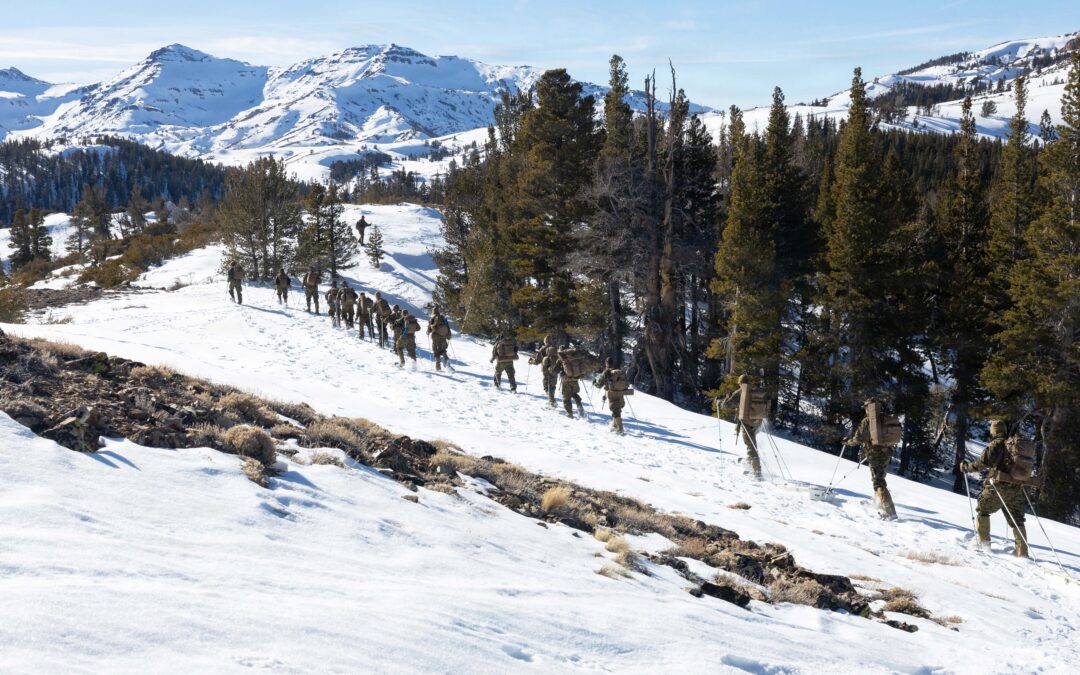
  • 250th Marine Corps Birthday message

  •  

II. Tech Trends: Updates on emerging technology trends shaping the digital world.

  • Oddest ChatGPT leaks yet: Cringey chat logs found in Google analytics tool

  • Leaks of unusually long ChatGPT prompts have been surfacing in Google Search Console (GSC) since September, revealing that user queries—often personal or business‑related—were inadvertently sent to Google when the AI’s web‑search feature was triggered by a buggy prompt box that appended “https://openai.com/index/chatgpt/” to each request. Analysts Jason Packer and Slobodan Manić traced the issue to a glitch that caused ChatGPT to route search‑enabled prompts to Google, which then logged the raw queries in the GSC of sites ranking for the “openai index chatgpt” keywords. OpenAI acknowledged the problem, stating it had fixed a temporary routing glitch affecting a small number of queries, while Google declined comment. The episode raises lingering concerns about privacy safeguards, the scale of exposed prompts, and whether the fix fully stops the leakage of user data to third‑party services.  Click here to read more.

III. Inspiration: Articles centered on faith that offer guidance and reflection.

  • Bear Grylls says writing about Jesus was the ‘hardest thing’ he’s ever done: ‘It’s a battleground’

  • Bear Grylls says writing The Greatest Story Ever Told—his retelling of Jesus’ life—was the toughest and most rewarding work he’s ever undertaken, eclipsing even his extreme‑sport exploits and television accolades. He describes the book as a fast‑paced, thriller‑style narrative that captures the grit, love, and sacrifice of Christ, aiming to reach readers of all ages and faiths. Grylls explains that the project emerged while filming in the jungle, driven by a deep desire to share the full story of Jesus beyond familiar highlights, and he credits the collaboration with The Chosen team for ensuring biblical accuracy. The author notes that the book’s impact has been profound, with people worldwide reporting life‑changing encounters, and he plans to extend the theme into a new series, The Chosen in the Wild, where cast members join him in outdoor challenges while reflecting on faith. Click here to read more.
     

IV. Cyber Safety: A focus on the latest cybersecurity threats, tips, or breaches impacting individuals and organizations.

  • The “novel Turing test” detects AI with up to 80% accuracy

  • A new “computational Turing test” can spot AI‑generated social‑media replies with roughly 70‑80 % accuracy across nine major language models, revealing that while the models mimic conversational structure, they consistently miss the emotional nuance of human posts—especially affect‑laden language, sentiment, and toxicity—making affective cues the strongest indicator of artificial origin. Optimizing outputs for a more human feel lowers semantic precision, and the test shows the models perform best on X‑style interactions but lag on Bluesky and Reddit. Despite these detectable gaps, AI‑written content remains prevalent, with studies indicating that over half of long‑form LinkedIn posts are at least partly generated by LLMs. Click here to read more.

V. Shield of Israel: Coverage from The Jerusalem Post, providing an Israeli perspective on ongoing conflicts.

  • Netanyahu, Kushner discuss 200 Hamas terrorists in tunnels behind Gaza’s Yellow Line

  • Prime Minister Benjamin Netanyahu met with former White House adviser Jared Kushner in Jerusalem to discuss the fate of roughly 200 Hamas fighters trapped in tunnels on the Israeli side of Gaza’s Yellow Line, a decision that will be coordinated with the Trump administration. The talks also covered broader goals of disarming Hamas, demilitarizing Gaza and preventing any future Hamas presence. U.S. pressure appears to be influencing Israel’s stance, with officials hinting that a compromise potentially granting safe passage to the detainees, could be part of the broader effort to end the conflict. Click here to read more.

     
THE DAILY PRAETORIAN: Cybersecurity Trends – 11/6/25

THE DAILY PRAETORIAN: Cybersecurity Trends – 11/6/25

Image Credit: iStock / 6381380 | Imagery Disclaimer

Securing Tomorrow: Your Daily Dose of Cyber Safety, Tech Trends, National Security News, and Inspiration.

“Clearly, logistics is the hard part of fighting a war.”


– Lt. Gen. E. T. Cook, USMC

I. National Security: Key developments in national security, particularly cyber and technological warfare.

  • Arc Orbital Supply Capsule Aims To Put Military Supplies Anywhere On Earth Within An Hour

  • Inversion, a California space startup, is developing Arc—a fully reusable, lifting‑body spacecraft designed to drop up to 500 pounds of mission‑critical cargo from low‑Earth orbit to any location on the planet within an hour, landing with roughly 50‑foot accuracy using an actively controlled parachute system. Though far smaller than a C‑17 payload, the rapid‑delivery concept targets high‑priority items such as ammunition, spare parts or medical supplies for forward troops, especially in contested or remote areas where traditional logistics falter. Arc can stay in orbit for up to five years, be de‑orbited on demand, and be recovered for reuse, with plans to launch multiple vehicles to form a “constellation” of on‑call resupply assets. The company aims for a first operational flight as early as next year, positioning the system as a niche but potentially transformative capability for military and humanitarian rapid‑response logistics. Click here to read more.


II. Tech Trends: Updates on emerging technology trends shaping the digital world.

  • New quantum hardware puts the mechanics in quantum mechanics

  • Quantinuum’s new Helios processor expands trapped‑ion quantum hardware from 56 to 96 qubits while preserving high two‑qubit gate fidelity, thanks to a novel loop‑and‑leg architecture that shuttles ions through a central four‑way intersection to bring any pair together for operations. The system’s active‑controlled parachute‑like ion routing reduces traffic jams, and its GPU‑driven real‑time control engine, paired with the updated Guppy Python SDK, enables dynamic error detection, correction and conditional programming. Using Helios, researchers simulated a Fermi‑Hubbard model of superconductivity, achieving accurate results despite modest error rates, and demonstrated the ability to configure the 96 physical qubits as 48 logical qubits via a concatenated error‑correction code. Quantinuum envisions future grid‑based chips that build on Helios’ junction reliability, aiming for larger, faster quantum processors that can tackle problems beyond classical reach. Click here to read more.


III. Inspiration: Articles centered on faith that offer guidance and reflection.

  • The underground church has a message for America

  • Across China, Vietnam and other restrictive regimes, underground Christians are quietly praying for the United States, viewing American believers not as foes but as spiritual family. Encounters with hidden believers—such as “Edith” in Macau and a clandestine Christian bookstore in Ho Chi Minh City—reveal a vibrant, covert network that sustains faith through marketplace ministries, discreet discipleship, and prayerful support of entrepreneurs. These believers admire the current U.S. leadership for openly naming Jesus and see American religious freedom as a source of courage, while urging Americans to recognize that their boldness strengthens churches the world over. Their message is simple: “We love you; we are not your enemies.” Click here to read more.
     

IV. Cyber Safety: A focus on the latest cybersecurity threats, tips, or breaches impacting individuals and organizations.

  • The password for the Louvre’s video surveillance system was “Louvre”

  • The Louvre’s video‑surveillance server was reportedly protected by the password “LOUVRE,” while a Thales‑provided system used “THALES,” and the museum’s internal network still ran obsolete Windows 2000 machines, exposing it to cyber risk for years before the October 2025 jewelry heist that stole nine priceless pieces. Although authorities label the thieves as petty criminals, experts argue that such weak credentials and outdated infrastructure likely contributed to the breach, prompting calls for frequent password changes, multi‑factor authentication and modern credential managers. The incident has sparked widespread online ridicule, highlighting how even world‑renowned institutions can suffer from basic security oversights. Click here to read more.

V. Shield of Israel: Coverage from The Jerusalem Post, providing an Israeli perspective on ongoing conflicts.

  • Kazakhstan to join Abraham Accords, Witkoff to announce tonight

  • Kazakhstan is set to become the newest member of the Abraham Accords, with U.S. Middle‑East envoy Steve Witkoff slated to confirm the announcement after a business forum in Florida. The move follows a broader push by the Biden administration, coordinated with Secretary of State Marco Rubio, to broaden normalization ties across the region. Israel and Kazakhstan have maintained diplomatic relations since 1992, with recent trilateral development agreements and a history of religious tolerance highlighted by the country’s Jewish community and the burial site of Rabbi Levi Yitzchak Schneerson. Adding Kazakhstan is portrayed as a stabilizing step that could pave the way for further nations to join the accords. Click here to read more.


Pin It on Pinterest