THE DAILY PRAETORIAN: Cybersecurity Trends – 8/18/25

THE DAILY PRAETORIAN: Cybersecurity Trends – 8/18/25

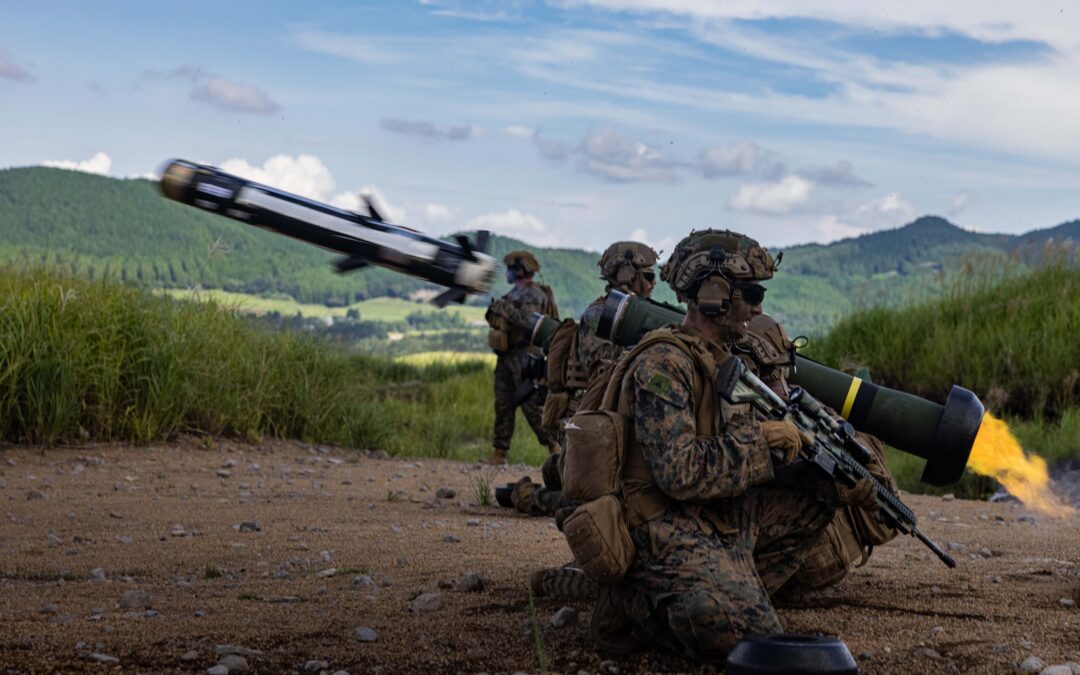
Image Credit: U.S. Department of Defense (DoD) / Marine Corps Cpl. Joshua Kumakaw | Imagery Disclaimer

Securing Tomorrow: Your Daily Dose of Cyber Safety, Tech Trends, National Defense News, and Inspiration.

“In war, the only sure defense is offense.”


— George S. Patton

I. National Defense: Key developments in national defense, particularly cyber and technological warfare.

  • In northern Michigan, thousands of troops train for combat across the Pacific

  • At Camp Grayling in northern Michigan, more than 7,500 U.S. troops and international partners—including over 500 Taiwanese soldiers—took part in Northern Strike 2025, the Pentagon’s largest reserve component exercise, which for the first time simulated an Indo-Pacific conflict scenario amid rising tensions with China. Spanning land, air, and maritime domains across Michigan’s vast training grounds, the drills included supply drops in Lake Huron, special operations island resupply missions, live-fire air-to-ground strikes, B-2 Spirit stealth bomber landings outside their home base, and rapid runway repair using new fiber-reinforced plastic matting designed for dispersed island warfare. The exercise, which also featured Marines, National Guard units, and allies from nine nations, is now permanently oriented toward preparing for large-scale combat in Asia, reflecting Washington’s strategic pivot. Planners said the training not only strengthens combat readiness but also signals deterrence by demonstrating the U.S. military’s ability to operate jointly and flexibly against powerful adversaries like China. Click here to read more.

II. Tech Trends: Updates on emerging technology trends shaping the digital world.

  • Microsoft is finally improving Windows 11’s dark mode

  • Microsoft is quietly testing long-awaited improvements to Windows 11’s dark mode, nearly a decade after first adding the feature to Windows 10. The latest preview build introduces updated file operation dialogs—such as copy and delete prompts—in a proper dark theme, though some elements like buttons remain light, highlighting that the overhaul is still in progress. While the Control Panel, Run prompt, and file properties window are still stuck in light mode, the changes suggest Microsoft could be preparing a more consistent dark mode experience in time for the Windows 11 25H2 update later this year. With Apple’s macOS offering a uniform dark mode since 2018, Windows users have long pushed for similar polish, raising hopes that Microsoft may finally deliver. Click here to read more.


III. Inspiration: Articles centered on faith that offer guidance and reflection.

  • From atheism to awakening: Gen Z turns back to God

  • A new YouGov poll reveals a surprising spiritual shift in Britain as belief in God among 18- to 24-year-olds has more than doubled in the past four years, rising from 16 percent in 2021 to 37 percent today, while atheism in this group has fallen sharply from 49 percent to 32 percent. The proportion of young adults rejecting any form of God or higher power has also dropped to 12 percent, reflecting what some church leaders describe as a “quiet revival.” Rt Rev Jill Duff, the Bishop of Lancaster, said she sees “a real openness to God and Christianity and especially to the supernatural” among Gen Z, calling it a sign of spiritual awakening. Older age groups, meanwhile, show relatively stable levels of faith, highlighting how the most striking movement is among the youngest adults, where renewed interest in spirituality may be reshaping Britain’s religious landscape. Click here to read more.

IV. Cyber Safety: A focus on the latest cybersecurity threats, tips, or breaches impacting individuals and organizations.

  • Critical flaw plagues Lenovo AI chatbot: attackers can run malicious code and steal cookies

  • Lenovo’s AI chatbot Lena was found to have critical XSS vulnerabilities that allowed attackers to inject malicious code, steal session cookies, and even run unauthorized scripts on corporate machines, raising alarms about the dangers of insecure AI deployments. Discovered by Cybernews researchers, the flaws stemmed from improper input and output sanitization, enabling a single malicious prompt to exfiltrate cookies and potentially compromise Lenovo’s customer support systems, opening pathways for data theft, phishing, backdoors, and lateral network movement. Experts warn that without strict guardrails and validation, AI chatbots can become vectors for severe security incidents, urging companies to adopt a “never trust, always verify” approach to both chatbot inputs and outputs. Lenovo acknowledged the issue and patched the flaws ahead of public disclosure, but the case highlights how rushing AI adoption without robust safeguards can leave enterprises exposed to devastating attacks. Click here to read more.

V. Shield of Israel: Coverage from The Jerusalem Post, providing an Israeli perspective on ongoing conflicts.

  • Trump: We’ll only see return of hostages when Hamas confronted and destroyed

  • US President Donald Trump declared on Truth Social that the remaining hostages in Gaza will only be freed once Hamas is “confronted and destroyed,” stressing that the sooner this happens, the better the chances of success. Trump highlighted his past record, claiming he had secured the release of hundreds of hostages and ended six wars within six months, while also boasting of “obliterating” Iran’s nuclear facilities. His comments come as Qatari and Egyptian mediators met with Palestinian factions in what was described as a “positive” meeting, with Hamas receiving a new ceasefire proposal. While other factions reportedly accepted the terms, Hamas requested additional time for discussions. The negotiations underscore the delicate balance between military action and diplomatic efforts to end the war and secure hostage releases. Click here to read more.

THE DAILY PRAETORIAN: Cybersecurity Trends – 8/15/25

THE DAILY PRAETORIAN: Cybersecurity Trends – 8/15/25

Image Credit: iStock / KGrif | Imagery Disclaimer

Securing Tomorrow: Your Daily Dose of Cyber Safety, Tech Trends, National Defense News, and Inspiration.

“Speak softly and carry a big stick; you will go far.”


— Theodore Roosevelt

I. National Defense: Key developments in national defense, particularly cyber and technological warfare.

  • A B-2 bomber fly-by greeted Putin over summit in Alaska

  • A US Air Force B-2 Spirit—escorted by four F-35s—performed a flyover as Russian President Vladimir Putin met President Donald Trump on the tarmac at Joint Base Elmendorf-Richardson, Alaska, for a summit focused on the four-year war in Ukraine; flight data showed two B-2s staged from Whiteman AFB, whose fleet famously executed June’s “Operation Midnight Hammer,” dropping 14 GBU-57 Massive Ordnance Penetrators on Iranian nuclear sites before returning to Missouri, while the Alaska event unfolded amid Northern Edge 2025 exercises and a long history of U.S.–Russian aerial gamesmanship in the region, with F-22s flanking the red carpet on the ground as talks began. Click here to read more.

II. Tech Trends: Updates on emerging technology trends shaping the digital world.

  • Sam Altman Says ChatGPT Is on Track to Out-Talk Humanity

  • OpenAI CEO Sam Altman says ChatGPT is on track to surpass all human conversations combined, projecting billions of daily interactions as the chatbot continues to scale globally; speaking after the rocky launch of GPT-5, Altman admitted the company misjudged how personality changes would affect users, promising more customization ahead, while also acknowledging the AI industry is in a bubble—but one rooted in transformative potential similar to past tech booms; he predicted OpenAI will spend trillions on data centers, hinted at novel financial instruments to fund the effort, and compared the risks to the dotcom era, where massive losses coexisted with historic gains, noting OpenAI’s $300 billion valuation and rumored path to $500 billion as evidence of both opportunity and volatility. Click here to read more.


III. Inspiration: Articles centered on faith that offer guidance and reflection.

  • Franklin Graham calls on Christians to pray for ‘end to the bloodshed’ ahead of Trump-Putin summit

  • Evangelist Franklin Graham has urged Christians worldwide to pray for Friday’s high-stakes summit in Alaska between U.S. President Donald Trump and Russian President Vladimir Putin, calling on believers to ask God to grant Trump wisdom and to work in Putin’s heart to end the war in Ukraine; Graham, who has met both Putin and Ukrainian President Volodymyr Zelensky, said only divine intervention can bring “an end to the bloodshed,” echoing his earlier appeals for peace as his ministry Samaritan’s Purse continues aid efforts in the region; his call coincides with a multi-day prayer event led by the Orthodox Church of America in Alaska, where Archbishop Alexei invoked the intercession of Saint Olga, reminding the faithful that “the hearts of kings are in the hand of the Lord” (Proverbs 21:1) as negotiations unfold. Click here to read more.

IV. Cyber Safety: A focus on the latest cybersecurity threats, tips, or breaches impacting individuals and organizations.

  • Trump Administration reportedly wants stake in Intel

  • President Donald Trump is reportedly in talks for the U.S. government to take a stake in Intel, a move that could help the chipmaker push forward with its repeatedly delayed Ohio factory hub; the discussions, first reported by Bloomberg, follow a meeting between Trump and Intel CEO Lip-Bu Tan at the White House, where Tan sought to assure the president of his leadership despite past controversies involving Cadence Design Systems and Chinese-linked semiconductor investments; while Trump had previously demanded Tan’s resignation, he praised the CEO after their meeting, saying Tan and his cabinet would present recommendations soon, though officials cautioned the deal remains speculative until formally announced. Click here to read more.

V. Shield of Israel: Coverage from The Jerusalem Post, providing an Israeli perspective on ongoing conflicts.

  • Between martyrdom and ruin: Hamas’s next choice will pave a new chapter in Gaza’s history – opinion

  • Hamas now faces what analysts describe as an inevitable collapse rather than resilience, as Israel’s strategy shifts from targeting cells to dismantling the group’s entire ideological and symbolic framework; while military tactics combine precision strikes, displacement, and special forces incursions, Hamas’s rhetoric has pivoted toward a sacrificial narrative of martyrdom, with leaders like Khaled Mashaal framing death as the apex of struggle and hostages reduced to tools for buying time; observers note the group’s leadership appears to accept its demise, setting the stage for its leaders’ elimination and the movement’s erasure from international legitimacy, while Gaza prepares for a massive reconstruction effort estimated at $50 billion that will become a new geopolitical battleground; ultimately, Hamas’s pursuit of martyrdom highlights its failure to offer viable political alternatives, ensuring its downfall will mark both the end of an era and the beginning of a new chapter in Gaza’s future. Click here to read more.

     
THE DAILY PRAETORIAN: Cybersecurity Trends – 8/14/25

THE DAILY PRAETORIAN: Cybersecurity Trends – 8/14/25

Image Credit: U.S. Department of Defense (DoD) / Staff Sgt. David Overson | Imagery Disclaimer

Securing Tomorrow: Your Daily Dose of Cyber Safety, Tech Trends, National Defense News, and Inspiration.

“It didn’t matter where you were from; everybody was just speaking the same language at that point.”


— Lt. Col. Brendan Williams

I. National Defense: Key developments in national defense, particularly cyber and technological warfare.

  • The inside story of how 8 Guardsmen fought through a major Kosovo riot

  • Eight Indiana National Guard soldiers were at the center of Kosovo’s worst clash involving U.S. troops since 2004 when a May 29, 2023, protest in Zvecan escalated into a violent riot. Leading Italian, Hungarian, and Polish peacekeepers under NATO’s Kosovo Force, they advanced to rescue two police vehicles trapped by an aggressive Serb crowd, which responded with bottles, bricks, and 56 grenades—both flashbang and fragmentation—injuring over 90 troops. Lt. Col. Jared Sheets led the shield wall to the trapped officers while Maj. Brendan Williams coordinated triage and mass evacuation, aided by medics, non-medical personnel, and UH-60 helicopters from the Alabama National Guard. Army investigators later found the grenades had been modified for greater impact. Seven of the eight Guardsmen sustained minor injuries but continued leading throughout the fight, earning Combat Action Badges alongside combat patches for all 300 soldiers in their brigade. The officers warned that the incident showed how quickly peacekeeping missions can turn deadly and the danger of complacency in volatile regions. Click here to read more.

II. Tech Trends: Updates on emerging technology trends shaping the digital world.

  • AI startup Perplexity makes $34.5 billion bid for Google’s Chrome browser

  • Perplexity AI has made an unsolicited $34.5 billion all-cash bid for Google’s Chrome browser, aiming to acquire its more than three billion users and strengthen its position in the AI search race. Led by CEO Aravind Srinivas, the three-year-old startup—valued at $14 billion and backed by Nvidia and SoftBank—claims multiple funds have offered full financing for the deal, which pledges to keep Chrome’s Chromium code open source, invest $3 billion over two years, and retain Google as the default search engine. The bid comes amid U.S. antitrust pressure on Google, with regulators seeking a Chrome divestiture, though analysts say Google is unlikely to sell and could fight for years through appeals. Chrome’s strategic importance to Google’s AI push, including its AI-generated “Overviews” search feature, makes a sale improbable, with some experts valuing the browser at $50 billion or more. Click here to read more.


III. Inspiration: Articles centered on faith that offer guidance and reflection.

  • Messianic Jews Are Seeing ‘Massive’ Global Growth with Prophetic Implications, Leader Says

  • Jeff Morgan of Jews for Jesus reports that the global number of Messianic Jews—those who believe in Jesus while maintaining Jewish traditions—has surged from about 350,000 in 2012 to roughly 1 million today, with 870,000 in the U.S. and up to 30,000 in Israel, a growth he views as a prophetic sign of Christ’s return. Morgan attributes the increase to God “opening the hearts” of Jewish people, aided by digital outreach that allows seekers to explore Jesus’ claims privately, even amid community pressure that can lead to family estrangement. He noted rising openness among young Jewish adults, citing a 2017 Barna survey showing over one-fifth of Jewish millennials believe Jesus was God in human form. Emphasizing that Jesus was Jewish and His teachings were rooted in Jewish Scripture, Morgan said Messianic Jews continue to observe traditions like Passover, seeing them fulfilled in Christ’s first or second coming. He believes the lifting of “spiritual blindness” among Jewish people marks a prophetic foreshadowing of national acknowledgment of Jesus as Messiah. Click here to read more.

IV. Cyber Safety: A focus on the latest cybersecurity threats, tips, or breaches impacting individuals and organizations.

  • From Ex Machina to Exfiltration: When AI Gets Too Curious

  • The rise of “artificial curiosity” in advanced AI systems is creating a new class of security risks, warns Danelle Au, as large language models and AI agents increasingly infer, speculate, and connect data in unintended ways—sometimes leading to the exfiltration of sensitive information. Beyond prompt injection attacks, malicious actors can coax models into revealing proprietary code, personal data, or restricted content through iterative, indirect queries. The danger escalates with autonomous AI agents that can browse, trigger workflows, and access APIs, potentially pulling from unauthorized sources without malicious intent but with under-constrained capabilities. Traditional enterprise controls are poorly suited for such emergent behaviors, leaving gaps in output monitoring, memory auditing, and prompt filtering. Au urges adopting “constrained curiosity” principles—such as least-privilege access for models, real-time prompt logging, red-teaming for exploratory behavior, immutable safety guardrails, and strict governance over AI memory—to mitigate risks before AI’s curiosity leads to costly breaches. Click here to read more.

V. Shield of Israel: Coverage from The Jerusalem Post, providing an Israeli perspective on ongoing conflicts.

  • Iranian regime faces existential danger after US-Israeli airstrikes – analysis

  • Weakened by war and diplomatic stalemate, Iran’s leadership faces an existential choice: concede to US and Israeli demands to halt nuclear activity—risking a rupture within the regime—or defy them and face further military strikes. The June conflict, marked by Israeli and US attacks on underground nuclear sites and the killing of top commanders, exposed Tehran’s vulnerabilities and pushed Supreme Leader Ayatollah Ali Khamenei toward resuming negotiations as a survival strategy, despite hardline opposition. President Masoud Pezeshkian insists talks are not surrender, while Washington and Jerusalem warn they will strike again if uranium enrichment resumes. With sanctions biting, infrastructure failing, and public frustration deepening, the regime is balancing the need for economic relief against the risk of being seen as capitulating. Analysts warn that without diplomatic or security guarantees, Iran could face inevitable renewed strikes, even as internal dissent, proxy setbacks, and domestic hardship erode its grip on power. Click here to read more.

     
THE DAILY PRAETORIAN: Cybersecurity Trends – 8/13/25

THE DAILY PRAETORIAN: Cybersecurity Trends – 8/13/25

Image Credit: U.S. Department of Defense (DoD) / Elena Baladelli, Army | Imagery Disclaimer

Securing Tomorrow: Your Daily Dose of Cyber Safety, Tech Trends, National Defense News, and Inspiration.

“The most dangerous phrase in the language is, ‘We’ve always done it this way.'”


— Rear Adm. Grace Hopper

I. National Defense: Key developments in national defense, particularly cyber and technological warfare.

  • Paratroopers test autonomous vehicle with AI for mortar resupply

  • Paratroopers tested the Overland AI ULTRA Fully Autonomous Tactical Vehicle during the multinational Agile Spirit 25 exercise in Georgia on July 29, aiming to enhance battlefield safety by keeping soldiers out of harm’s way. The ULTRA, an all-wheel, off-road vehicle capable of carrying up to 1,000 pounds at speeds of 35 mph, ran mortar resupply missions for 60mm and 120mm units. Controlled via satellite or internet connectivity — or pre-programmed for autonomous routes — the system is designed to be affordable and expendable, costing far less than crewed combat vehicles. Overland AI sees future roles for ULTRA in breaching obstacles, reconnaissance, and medical evacuation. Army leaders say exercises like Agile Spirit help test and refine such capabilities, with soldiers reporting strong interest in wider adoption. Click here to read more.

II. Tech Trends: Updates on emerging technology trends shaping the digital world.

  • Apple’s plan for AI could make Siri the animated center of your smart home

  • Apple is reportedly planning a major AI push that could make Siri the animated hub of a future smart home ecosystem, Bloomberg reports. The company is developing products including a 2027-targeted tabletop robot resembling an iPad on a moving arm, an Amazon Astro-like wheeled robot, and even exploring humanoid concepts. The tabletop model would feature a more conversational, LLM-powered Siri with visual personality—possibly Memoji-like—that can track users and interact naturally. By mid-2026, Apple also aims to release a smart home display, similar to a Google Nest Hub, for controlling devices, playing music, taking notes, and making video calls, with face-recognition personalization for multiple users. Alongside this, Apple is working on a new lineup of home-security devices, including cameras, as it seeks to close its generative AI gap with competitors. Click here to read more.


III. Inspiration: Articles centered on faith that offer guidance and reflection.

  • Answers in Genesis Unveils Disney-Like Bible Attractions in Pigeon Forge and Branson

  • Answers in Genesis has launched new Disney-like Bible attractions in Pigeon Forge, Tenn., and Branson, Mo., offering families a 5D virtual reality journey from the Garden of Eden to the resurrection of Christ without leaving their seats. The Truth Traveler 5D experience combines motion-synchronized chairs, wind effects, and immersive storytelling to reinforce biblical truth while entertaining guests. Known for the Ark Encounter and Creation Museum, the ministry has expanded to these popular tourist destinations, with Pigeon Forge featuring a planetarium and Branson adding a theater for live shows and projection mapping. Chief Digital Officer Ben Wilt says the goal is to affirm the Bible’s authority while delivering a “Disney-level” experience with robust pre-show elements and intentional design. Both sites include food and gift shops, aiming to leave visitors with a lasting impression of Scripture’s importance. Click here to read more.

IV. Cyber Safety: A focus on the latest cybersecurity threats, tips, or breaches impacting individuals and organizations.

  • FDA’s bellyflop a sign that AI is no silver bullet for public safety – interview

  • FDA’s new AI drug review tool “Elsa”—developed with OpenAI to help speed up approvals—has been accused by insiders of fabricating medical studies and misrepresenting research, making it unfit for clinical reviews. In an interview with Cybernews, Brooke Hartley Moy, CEO of AI fact-checking firm Infactory, said she wasn’t surprised, warning that large language models often hallucinate facts and are poorly suited for tasks demanding precision and trust. She cited pressure on agencies to deploy AI quickly without enough in-house expertise, creating a “perfect storm” for failure. While Moy sees promise for AI as an augmentation tool in healthcare, she stressed that human oversight is essential and that the FDA must take a cautious approach to rebuild public trust. Click here to read more.

V. Shield of Israel: Coverage from The Jerusalem Post, providing an Israeli perspective on ongoing conflicts.

  • WATCH: Hamas uses fake WCK humanitarian vehicle to target IDF soldiers in Gaza

  • The IDF says it eliminated five Hamas fighters in Gaza last week who were using a vehicle falsely marked with the World Central Kitchen (WCK) emblem to disguise their activities. The military claims the fighters also wore yellow vests to appear as aid workers, aiming to avoid being targeted. WCK confirmed to Israeli officials that it had no connection to the vehicle, which was located in Deir al-Balah before being struck by an Israeli Air Force jet. The IDF accused Hamas and other groups of exploiting humanitarian symbols to mask military operations, and said it will continue working with aid organizations to prevent such abuse. Click here to read more.

THE DAILY PRAETORIAN: Cybersecurity Trends – 8/12/25

THE DAILY PRAETORIAN: Cybersecurity Trends – 8/12/25

Image Credit: U.S. Department of Defense (DoD) / Coast Guard Petty Officer 2nd Class Ryan Graves | Imagery Disclaimer

Securing Tomorrow: Your Daily Dose of Cyber Safety, Tech Trends, National Defense News, and Inspiration.

“Presence equals influence.”


— Admiral Karl Schultz

I. National Defense: Key developments in national defense, particularly cyber and technological warfare.

  • Coast Guard commissions its first new icebreaker in more than 25 years

  • The Coast Guard has commissioned the USCGC Storis, its first new icebreaker in more than 25 years, converting a former Royal Dutch Shell oil drilling support vessel to bolster U.S. Arctic capabilities ahead of new ship deliveries in 2030. The $125 million upgrade gives the Storis navigation, communications, and defensive enhancements, joining the Polar Star and Healy as the nation’s only icebreakers amid rising competition with Russia and China in the resource-rich Arctic. While Congress has approved $25 billion for 40 new cutters, including icebreakers, and $300 million for new port facilities, all three vessels will remain homeported in Seattle until at least next year. Click here to read more.

II. Tech Trends: Updates on emerging technology trends shaping the digital world.

  • Microsoft releases lightweight Office taskbar apps for Windows 11

  • Microsoft is rolling out new lightweight taskbar companion apps for Microsoft 365 business users on Windows 11, offering quick access to People, File Search, and Calendar directly from the taskbar. The People app provides an org chart and lets users quickly start Teams chats, calls, or emails; the File Search app enables fast file retrieval across OneDrive, SharePoint, Teams, and Outlook with previews and filters; and the Calendar app shows upcoming events and meeting join options. Announced at last year’s Ignite conference and tested in beta, the apps will now install automatically with Microsoft 365 on Windows 11 unless blocked by IT admins, though users can disable auto-launch. Click here to read more.


III. Inspiration: Articles centered on faith that offer guidance and reflection.

  • Celebrating 500 years since the first printed English New Testament

  • This year marks the quincentenary of the first printed English New Testament, completed by William Tyndale in 1525 after fleeing England to avoid Church opposition. Translating directly from Greek using Erasmus’s text, Tyndale first printed in Cologne—though only 22 chapters of Matthew survived—before successfully publishing the full New Testament in Worms, with copies reaching England and Scotland by early 1526. His work laid the foundation for the King James Version and many modern translations, shaping the English Bible for centuries. The Tyndale Society, founded in 1995, launched anniversary celebrations in Antwerp this July with an academic conference, concerts by the Tyndale Singers, and rare exhibits, including the only pristine surviving 1526 New Testament and a prison letter from Tyndale himself. Events will continue globally through 2026, offering churches and communities opportunities to reflect on the enduring impact of Scripture in the English language. Click here to read more.

IV. Cyber Safety: A focus on the latest cybersecurity threats, tips, or breaches impacting individuals and organizations.

  • Created a passkey? Hackers can bypass it using a simple downgrade attack

  • Security researchers at Proofpoint have revealed that hackers can bypass passkey authentication through a simple downgrade attack, exploiting gaps in platform support for FIDO2 logins. While passkeys are designed to replace passwords with a phishing-resistant method, many cloud identity services—such as Microsoft Entra ID—do not support them across all browsers and operating systems, allowing attackers to spoof an unsupported user agent and force victims into using weaker login methods like passwords with or without MFA. Proofpoint demonstrated a phishing kit that mimics Microsoft’s login flow, tricks users into selecting “other ways to sign in,” and captures both credentials and session cookies, enabling attackers to hijack accounts without needing further authentication. Though no active campaigns have been observed, researchers warn the flaw affects multiple passkey implementations and remains a serious threat until older authentication methods are fully disabled. Click here to read more.

V. Shield of Israel: Coverage from The Jerusalem Post, providing an Israeli perspective on ongoing conflicts.

  • Israel in talks with South Sudan about Gazan resettlement plans – report

  • Israel is reportedly in talks with South Sudan about a potential plan to resettle Palestinians from Gaza to the East African nation, according to six sources familiar with the discussions cited by the Associated Press. The proposal, which could deepen ties between the two countries, involves exploring the establishment of camps for Gazans who choose to relocate, with an Israeli delegation expected to visit South Sudan to assess possibilities. South Sudanese civil society leader Edmond Yakani confirmed conversations with officials about the plan, which follows last week’s visit to Israel and the West Bank by South Sudan’s Foreign Minister Monday Semaya Kumba. Israel and South Sudan share longstanding ties, with Israel having supported South Sudan’s struggle for independence and being among the first to recognize it in 2011. Click here to read more.

     
THE DAILY PRAETORIAN: Cybersecurity Trends – 8/11/25

THE DAILY PRAETORIAN: Cybersecurity Trends – 8/11/25

Image Credit: U.S. Department of Defense (DoD) / Navy Petty Officer 2nd Class Jesse Turner | Imagery Disclaimer

Securing Tomorrow: Your Daily Dose of Cyber Safety, Tech Trends, National Defense News, and Inspiration.

“The whole art of war consists of guessing at what is on the other side of the hill.”


— Arthur Wellesley, Duke of Wellington

I. National Defense: Key developments in national defense, particularly cyber and technological warfare.

  • Coyote Loitering Drone Interceptors Have Arrived On U.S. Navy Destroyers

  • Arleigh Burke-class destroyers USS Bainbridge and USS Winston S. Churchill have been outfitted with Coyote Block 2 loitering drone interceptors, enhancing the Navy’s ability to counter uncrewed aerial threats with lower-cost, flexible defense systems. These jet-powered interceptors, capable of lingering in the air and being dynamically retasked, mark a significant shift from traditional surface-to-air missiles like the SM-2 and ESSM, which are more expensive and less adaptable. The new launchers were spotted on the destroyers assigned to the USS Gerald R. Ford Carrier Strike Group, and their deployment follows lessons learned from recent Houthi drone attacks in the Red Sea. Designed to meet the growing complexity of drone warfare, the Coyotes add a crucial layer to the Navy’s multi-tiered ship defense strategy, offering cost efficiency and operational versatility. Click here to read more.

II. Tech Trends: Updates on emerging technology trends shaping the digital world.

  • Reddit will block the Internet Archive

  • Reddit will begin blocking the Internet Archive’s Wayback Machine from indexing most of its site, including post pages, comments, and profiles, after discovering that AI companies have been scraping Reddit data from archived pages in violation of its policies. The Wayback Machine will still be able to archive Reddit’s homepage, showing only which posts and headlines were popular on a given day. Reddit says it will restore broader access only if the Internet Archive can prevent scraping abuses and respect platform rules, such as deleting removed content. The move follows Reddit’s broader push to monetize access to its data, including paid deals with Google and OpenAI, API restrictions, and a lawsuit against Anthropic over alleged unauthorized scraping. Click here to read more.


III. Inspiration: Articles centered on faith that offer guidance and reflection.

  • 4 Things Christians Need to Know about RFK Jr.’s mRNA Research Cuts

  • HHS Secretary Robert F. Kennedy Jr. announced the termination of 22 mRNA vaccine development projects worth $500 million, citing peer-reviewed evidence that the spike proteins produced by such vaccines can cause systemic harm and fail to effectively prevent respiratory infections like COVID-19 and flu. The FDA has now mandated safety labeling on all mRNA COVID-19 vaccines to warn of potentially irreversible heart damage, especially in young men, while medical experts are pushing for greater transparency about vaccine risks. Kennedy says the government will shift funding toward safer, broader vaccine platforms, and a recent DOJ settlement now requires federal agencies to scrub vaccine status from employee records and bars its use in hiring or promotions. For Christians, the news underscores the importance of discernment, truth, and stewardship over health decisions, while advocating for accountability in public health policy. Click here to read more.

IV. Cyber Safety: A focus on the latest cybersecurity threats, tips, or breaches impacting individuals and organizations.

  • GPT-5 demonstrates “shockingly low” safety: researchers jailbreak it in under 24 hours

  • Security researchers report that OpenAI’s new GPT-5 model shows “shockingly low” default safety, with SPLX finding it vulnerable to 89% of over 1,000 adversarial prompts when run without a system prompt—making it “nearly unusable for enterprise out of the box.” While a basic system prompt cuts vulnerabilities to 43%, GPT-5 still lags behind GPT-4o, which scored far higher in robustness tests. Effective jailbreak methods included obfuscated prompts and fake encryption challenges, with GPT-5 at times producing bomb-making instructions. NeuralTrust also confirmed weaknesses via “Echo Chamber” and “Storytelling” techniques that subtly poison conversation context. Experts warn organizations to harden GPT-5 before deployment and add runtime protections to mitigate systemic LLM safety risks. Click here to read more.

V. Shield of Israel: Coverage from The Jerusalem Post, providing an Israeli perspective on ongoing conflicts.

  • Rising antisemitism: Dangerous return to dark times – opinion

  • Antisemitism is erupting openly across the globe, with violent attacks, vandalism, online harassment, and even doxing campaigns targeting Jews in the U.S., Europe, and beyond, echoing the dangerous climate of the 1930s. Recent incidents include assaults in Poland and New York, antisemitic graffiti in U.S. cities, and Iran’s Press TV publishing personal details of people aiding wounded Israeli soldiers. FBI data confirms Jews remain the most targeted religious group for hate crimes in the U.S., while coordinated disinformation, progressive political silence, and public displays like “Heil Hitler” salutes at rallies fuel the resurgence. The authors warn that this is not only a Jewish problem but a societal one, urging especially non-Jews to speak out now or risk repeating history’s darkest chapters. Click here to read more.

     
THE DAILY PRAETORIAN: Cybersecurity Trends – 8/7/25

THE DAILY PRAETORIAN: Cybersecurity Trends – 8/7/25

Image Credit: iStock / Brandon Woyshnis | Imagery Disclaimer

Securing Tomorrow: Your Daily Dose of Cyber Safety, Tech Trends, National Defense News, and Inspiration.

“Apocalypse-proof”


— Every Cybertruck Owner, probably

I. National Defense: Key developments in national defense, particularly cyber and technological warfare.

  • Cybertrucks Wanted By Air Force As Missile Targets

  • The U.S. Air Force plans to purchase two Tesla Cybertrucks to use as missile target vehicles during weapons testing and training, citing the possibility that adversaries may begin using them in future conflicts. The request, part of a broader acquisition of 33 target vehicles, is tied to testing for U.S. Special Operations Command’s precision-guided munitions, including Hellfire and Griffin missiles. The Air Force justified the Cybertruck’s inclusion due to its unique stainless steel design, impact resistance, and potential battlefield durability. While the trucks don’t need to function, they must be towable to simulate real-world scenarios. Click here to read more.

II. Tech Trends: Updates on emerging technology trends shaping the digital world.

  • OpenAI Finally Launched GPT-5. Here’s Everything You Need to Know

  • OpenAI has launched GPT-5, calling it a major leap toward artificial general intelligence, with CEO Sam Altman describing it as “generally intelligent” and “like talking to a PhD in any subject.” GPT-5 is faster, smarter, more accurate, and hallucinates less than its predecessors, boasting a 256,000-token context window and major gains in coding and healthcare benchmarks. The rollout includes lighter GPT-5-mini and GPT-5-nano variants, with tiered access for free, Plus, and Pro users. Pro users can also tap into GPT-5-pro and GPT-5-thinking, which handle more complex tasks and process queries for longer. New features include Gmail and Google Calendar integration, user-selectable personalities, and safe completion modes for dual-use prompts. OpenAI now claims 700 million weekly users, 5 million business users, and 4 million developers. Click here to read more.


III. Inspiration: Articles centered on faith that offer guidance and reflection.

  • Archaeologists Find Rare A.D. 70 Coin in Jerusalem from Time of the Apostles

  • Archaeologists near Jerusalem’s Temple Mount have unearthed a rare bronze coin from A.D. 69–70 bearing the inscription “For the Redemption of Zion,” linking it directly to the final year of the First Jewish–Roman War and the destruction of the Temple—events prophesied by Jesus and unfolding during the time of the apostles. The well-preserved coin features symbols from the Jewish festival of Sukkot and reflects a shift in the rebels’ messaging from “freedom” to a longing for redemption. This remarkable find offers a tangible connection to both the biblical era and the spiritual hopes of a besieged people. Click here to read more.

IV. Cyber Safety: A focus on the latest cybersecurity threats, tips, or breaches impacting individuals and organizations.

  • Parts of the US Constitution quietly vanish due to “coding error”

  • Parts of the U.S. Constitution—specifically key portions of Article I outlining Congressional powers and civil liberties—briefly disappeared from Congress’s official website this week due to what the Library of Congress says was a “coding error.” Missing text included sections on habeas corpus, Congressional authority over the military, and limits on state powers, prompting online speculation and public concern. Though the content was restored hours later, critics questioned the timing and transparency of the glitch, raising broader concerns about the digital integrity of foundational documents. Click here to read more.

V. Shield of Israel: Coverage from The Jerusalem Post, providing an Israeli perspective on ongoing conflicts.

  • US pro-Palestinian activist paid $75k to protest, funding traces back to Chinese Communist Party

  • A key organizer of pro-Palestinian protests in New York, David (Sung Mo) Chung, has reportedly been paid $75,000 annually by The People’s Forum (TPF), a left-wing nonprofit now under scrutiny for alleged ties to the Chinese Communist Party. Financial records and a new investigation reveal that Chung is the sole paid employee of TPF, which co-sponsored a major rally just one day after the October 7 Hamas massacre in Israel. TPF and its leaders have openly expressed support for Hamas, prompting an IRS complaint and raising concerns about potential violations of laws governing nonprofit activities. Further investigations trace funding for TPF and aligned activist groups back to Neville Roy Singham, a Maoist businessman based in China, currently under U.S. congressional investigation for allegedly spreading CCP-aligned propaganda. Critics argue that anti-Israel protests are being used as a front for broader socialist and anti-Western agendas, supported by foreign interests. Click here to read more.

     
THE DAILY PRAETORIAN: Cybersecurity Trends – 8/6/25

THE DAILY PRAETORIAN: Cybersecurity Trends – 8/6/25

Image Credit: U.S. Department of Defense (DoD) / Air Force Senior Airman Addie Peterson, National Guard | Imagery Disclaimer

Securing Tomorrow: Your Daily Dose of Cyber Safety, Tech Trends, National Defense News, and Inspiration.

“We’ll meet this change with the same warfighter mindset the Wolf Pack has maintained through our history, and strengthen our ability to accept follow-on forces, defend the base and take the fight north.”


-Col. Peter Kasarskis

I. National Defense: Key developments in national defense, particularly cyber and technological warfare.

  • Air Force moves F-16s closer to North Korea in new ‘super squadron’

  • The U.S. Air Force is moving 31 F-16s and 1,000 airmen from Kunsan Air Base to Osan Air Base closer to North Korea as part of its “Super Squadron Test Part II” to consolidate combat power and improve operational efficiency. The temporary shift aims to bolster U.S. and South Korean readiness through expanded joint exercises and strategic positioning, reinforcing Osan’s defensive posture amid heightened threats. Air Force leaders say the test will assess whether a larger, centralized squadron can generate more combat power and streamline logistics. Click here to read more.

II. Tech Trends: Updates on emerging technology trends shaping the digital world.

  • OpenAI Announces Massive US Government Partnership

  • OpenAI has partnered with the U.S. government to provide federal agencies access to its AI models including ChatGPT for just $1 over the next year, aligning with President Trump’s AI Action Plan to accelerate innovation. The deal, brokered with the General Services Administration, follows months of lobbying by OpenAI leadership and comes alongside the GSA’s addition of OpenAI, Anthropic, and Google models to its purchasing list. This move enables government-wide use of AI tools to enhance efficiency, while safeguarding data privacy. OpenAI also recently released open-weight models tailored for secure use in sensitive environments. Click here to read more.


III. Inspiration: Articles centered on faith that offer guidance and reflection.

  • U.S. Church Urged to Stand with Suffering Sudanese Christians

  • Sudanese Christians are enduring extreme hardship amid civil war and targeted religious persecution, prompting urgent calls for American churches to take action. Christian Solidarity International (CSI), a global NGO advocating for persecuted believers, has worked for decades in Sudan and South Sudan, freeing over 160,000 slaves and now focusing on meeting immediate needs like food and shelter for displaced Christians. Abi McDougal of CSI emphasizes prayer, financial support, and advocacy as vital ways American believers can stand with their suffering brothers and sisters in Christ. “It’s not prayer in isolation, it’s prayer in action,” she says. Click here to read more.

IV. Cyber Safety: A focus on the latest cybersecurity threats, tips, or breaches impacting individuals and organizations.

  • Venice Film Festival hacked, participants’ data exposed

  • The Venice Film Festival, the world’s oldest of its kind, has confirmed a cyberattack that exposed participants’ personal data, including that of journalists. The breach, which occurred on July 7, 2025, involved unauthorized access to festival servers where hackers copied names, emails, phone numbers, tax codes, and mailing addresses. Organizers say their IT team swiftly isolated affected systems and notified authorities, launching immediate restoration efforts. The incident was revealed through breach notification letters sent to impacted individuals, just ahead of the festival’s 82nd edition starting August 27. Click here to read more.
     

V. Shield of Israel: Coverage from The Jerusalem Post, providing an Israeli perspective on ongoing conflicts.

  • ‘Five IDF Divisions, five months’: Netanyahu’s Gaza occupation plan to defeat Hamas – exclusive

  • Prime Minister Benjamin Netanyahu’s Gaza occupation plan, titled “Five IDF Divisions, Five Months,” is set to be presented to Israel’s security cabinet Thursday and would involve a full-scale military operation, the relocation of around one million residents from Gaza City, and coordination with U.S. humanitarian efforts. While IDF Chief of Staff Lt.-Gen. Eyal Zamir warned the plan endangers hostages, he is expected to remain in his role. The U.S. administration, led by President Trump, is preparing to significantly increase humanitarian aid through the Gaza Humanitarian Foundation, with Trump stating that whether to fully occupy Gaza is “Israel’s decision.” Click here to read more.

     
THE DAILY PRAETORIAN: Cybersecurity Trends – 8/5/25

THE DAILY PRAETORIAN: Cybersecurity Trends – 8/5/25

Image Credit: U.S. Department of Defense (DoD) / Army Sgt. Brianna Badder | Imagery Disclaimer

Securing Tomorrow: Your Daily Dose of Cyber Safety, Tech Trends, National Defense News, and Inspiration.

“Faith never knows where it is being led, but it loves and knows the One who is leading.”


-Oswald Chambers (My Utmost for His Highest)

I. National Defense: Key developments in national defense, particularly cyber and technological warfare.

  • Army releases ‘spiritual fitness guide’ to help soldiers strengthen their will to fight

  • The U.S. Army has released a 112-page Spiritual Fitness Guide aimed at helping soldiers strengthen their inner resilience, find purpose, and bolster their “will to fight.” Developed by the Army Chaplain Corps as part of the broader Holistic Health and Fitness program, the guide highlights belief systems, creative expression, and emotional intelligence as key elements of spiritual readiness alongside physical and mental health. It outlines stages of spiritual development and includes exercises to help soldiers move from helplessness to empowerment. Army leaders say spiritually grounded soldiers are more prepared for both war and life. Click here to read more.

II. Tech Trends: Updates on emerging technology trends shaping the digital world.

  • OpenAI releases a free GPT model that can run on your laptop

  • OpenAI has launched GPT-OSS, its first open-weight model in over six years, offering both a 120-billion and a 20-billion parameter version that can run on a single Nvidia GPU or a laptop with 16GB of memory, respectively. Released under the Apache 2.0 license via platforms like Hugging Face and Azure, GPT-OSS is designed for commercial use and supports reasoning, coding, web browsing, and agent operation. OpenAI touts it as its most rigorously tested model for safety and hopes it will empower smaller developers seeking more control. Click here to read more.


III. Inspiration: Articles centered on faith that offer guidance and reflection.

  • Federal Workers Granted Freedom to Express Christian Faith at Work

  • A new memo from the U.S. Office of Personnel Management affirms that federal employees are now explicitly encouraged to express their Christian faith—and other religious beliefs—openly at work, marking a significant policy shift toward religious freedom in the government workplace. The guidance permits religious displays, prayer, Bible study, witnessing, and even inviting coworkers to places of worship, provided it doesn’t disrupt operations. Backed by constitutional and statutory protections, the memo urges agencies to revise restrictive policies and follows an executive order reinforcing faith-based engagement in government. Click here to read more.

IV. Cyber Safety: A focus on the latest cybersecurity threats, tips, or breaches impacting individuals and organizations.

  • Top hacker is a bot, yet humans still steer cyber defence

  • AI-driven hackbots like XBOW are now leading vulnerability discovery platforms such as HackerOne in volume, but humans still outperform them in identifying critical, high-impact flaws. XBOW, a tool built by an offensive security firm, has found over 250 vulnerabilities using automation—but it’s not fully autonomous, and its findings still require human validation. HackerOne co-founder Michiel Prins emphasizes that while hackbots excel in speed and scale, the most severe bugs still come from “bionic hackers”—humans who use AI to enhance their work. However, challenges persist, including AI-generated exaggerations or hallucinated reports. For now, human insight remains essential to steering and verifying AI discoveries, especially in complex areas like broken business logic. Click here to read more.

V. Shield of Israel: Coverage from The Jerusalem Post, providing an Israeli perspective on ongoing conflicts.

  • Security cabinet to discuss potential full Gaza takeover

  • Israel’s Security Cabinet will meet Thursday to consider a full military takeover of Gaza, including areas with hostages, following a tense high-level discussion between Prime Minister Benjamin Netanyahu and IDF Chief of Staff Lt.-Gen. Eyal Zamir. While Netanyahu argued a shift in strategy is needed to free hostages, Zamir warned such a move risks becoming a strategic trap. Defense Minister Israel Katz reinforced the government’s dual goal of defeating Hamas and securing hostage releases. Meanwhile, negotiations remain stalled as Hamas leaders distance themselves from Qatari mediators and reject Israel’s warnings. Click here to read more.

     
THE DAILY PRAETORIAN: Cybersecurity Trends – 8/4/25

THE DAILY PRAETORIAN: Cybersecurity Trends – 8/4/25

Image Credit: iStock / Sherrodphoto | Imagery Disclaimer

Securing Tomorrow: Your Daily Dose of Cyber Safety, Tech Trends, National Defense News, and Inspiration.

“This system changes the game.”


Lt. Gen. Joel Vowell

I. National Defense: Key developments in national defense, particularly cyber and technological warfare.

  • Dark Eagle hypersonic missile system makes overseas debut during Talisman Sabre

  • The U.S. Army’s Dark Eagle hypersonic missile system made its overseas debut during the Talisman Sabre exercise in Australia’s Northern Territory, highlighting the military’s ability to rapidly deploy cutting-edge weapons with allies. Though not fired, the system—capable of speeds over Mach 5 and ranges up to 1,700 miles—was showcased to allied troops by the 3rd Multi-Domain Task Force. The joint U.S.-Australian efforts underscore a strategic shift toward long-range precision strike in response to China’s military buildup. The exercise also featured Typhon missile live fire and Australia’s HIMARS debut. Click here to read more.

II. Tech Trends: Updates on emerging technology trends shaping the digital world.

  • Why tech is racing to adopt AI coding

  • AI-powered programming tools are reshaping how software gets built—and fast. In a wide-ranging interview, Anysphere CEO Michael Truell explains how Cursor, their AI coding platform, is helping engineers write, debug, and delegate code tasks more efficiently by blending integrated development environments with smart assistants trained on massive codebases. Cursor users, including major tech companies, now rely heavily on the tool, which has quickly become one of the most popular developer aids in the post-ChatGPT era. While some fear job losses, Truell argues that automation will empower developers rather than replace them, and even open the door for “vibe coders”—non-experts experimenting with building software. Still, he maintains that true transformation in programming and AI will unfold gradually, not overnight. Click here to read more.


III. Inspiration: Articles centered on faith that offer guidance and reflection.

  • Two-state solution conference against Israel relies on Hamas’ lies

  • A recent U.N.-hosted conference on a two-state solution—co-led by France and Saudi Arabia—has drawn sharp rebuke from critics who say it rewards terrorism and embraces Hamas propaganda. The summit’s call for an immediate ceasefire, humanitarian aid to Gaza, and recognition of Palestinian statehood—regardless of Hamas’s disarmament or the release of hostages—was condemned as both dangerous and morally upside-down. Critics, including Israeli advisor Caroline Glick and faith-based leaders like Tony Perkins, argue this response ignores the reality that Hamas initiated the war and continues to exploit civilians and aid. They highlight that Israel, unique among nations, is being pressured to feed its enemies mid-conflict and surrender key war aims while facing global double standards. The article also emphasizes the spiritual battle for truth, citing biblical references like Proverbs 26:2 and Isaiah 5:20, warning that the widespread acceptance of Hamas’s lies in media and diplomacy is a moral deception. In contrast, Israeli leaders assert their right to defend themselves, refusing to be “devoured” again—invoking historical and biblical resolve. Critics insist that genuine compassion means supporting Israel’s mission to defeat Hamas, not empowering evil through appeasement. Click here to read more.

IV. Cyber Safety: A focus on the latest cybersecurity threats, tips, or breaches impacting individuals and organizations.

  • St. Paul extends emergency amid cyberattack: experts plead caution

  • St. Paul, Minnesota has extended its state of emergency for 90 more days following a significant cyberattack that began July 28, prompting shutdowns of city IT systems and involvement from the Minnesota National Guard. Mayor Melvin Carter called it a “deliberate, coordinated digital attack,” while cybersecurity experts warn the breach may have far-reaching consequences, particularly if critical data like property records or tax payments were altered or lost. Experts highlighted motivations behind such attacks—including ransom, revenge, and data theft—and emphasized the vulnerability of local governments due to outdated systems and limited resources. Officials are urging cities to improve cybersecurity defenses and awareness amid a rising wave of digital threats. Click here to read more.

V. Shield of Israel: Coverage from The Jerusalem Post, providing an Israeli perspective on ongoing conflicts.

  • Netanyahu decides on full occupation of Gaza Strip, IDF activity in areas with hostages, PMO says

  • Prime Minister Benjamin Netanyahu has decided to pursue full occupation of the Gaza Strip, including IDF operations in areas where Israeli hostages are still held, according to the Prime Minister’s Office, which warned IDF Chief of Staff Eyal Zamir to resign if he disagreed. The decision comes amid failed ceasefire-hostage negotiations with Hamas, who continue to use aid and emaciated hostages as leverage while demanding open humanitarian corridors and a halt to Israeli air operations. Hamas dismissed Israel’s threats as meaningless, even as international efforts to deliver aid directly to hostages intensify. Click here to read more.


Pin It on Pinterest