THE DAILY PRAETORIAN: Cybersecurity Trends – 1/26/26

THE DAILY PRAETORIAN: Cybersecurity Trends – 1/26/26

Image Credit: U.S. Department of War (DoW) / Navy Petty Officer 3rd Class Shepard Fosdyke-Jackson | Imagery Disclaimer

Securing Tomorrow: Your Daily Dose of Cyber Safety, Tech Trends, National Security News, and Inspiration.

“Those who deny freedom to others, deserve it not for themselves; and, under a just God, can not long retain it.”


-Abraham Lincoln

I. National Security: Key developments in national security, particularly cyber and technological warfare.

  • Lincoln Carrier Strike Group Has Arrived In CENTCOM’s Area Of Responsibility

  • The U.S. Navy’s USS Abraham Lincoln Carrier Strike Group entered the CENTCOM area of responsibility, bringing its carrier, three Arleigh Burke‑class destroyers and a carrier air wing of F‑35Cs, Super Hornets, Growlers, Hawkeyes, Ospreys and helicopters, while the Air Force launched the Agile Spartan exercise and deployed additional F‑15E fighters, Patriot and THAAD systems, and cargo and refuel aircraft to the Middle East; these moves coincide with President Trump’s repeated threats to strike Iran, Iran’s vows to defend itself, and warnings from Iranian and proxy forces that any U.S. or Israeli attack could provoke a painful retaliation, prompting Israel to place its own forces on high alert, the UAE to deny use of its territory for attacks, and regional allies such as the UK to dispatch defensive Typhoon jets to Qatar—all amid a volatile backdrop of recent Iranian protests, civilian casualties and heightened diplomatic tension. Click here to read more.

II. Tech Trends: Updates on emerging technology trends shaping the digital world.

  • OpenAI spills technical details about how its AI coding agent works

  • OpenAI revealed the inner workings of its AI coding agent, showing that the system operates through a continuous “agent loop” that takes a user’s request, builds a prompt for the model, and then either returns a final answer or issues a tool call—such as executing a shell command or reading a file—whose output is fed back into the prompt for another model query until the task is completed; the initial prompt sent to OpenAI’s Responses API combines a system instruction (from a config file or default CLI bundle), a tools definition (listing callable functions like shell commands, planners, web searches, or custom MCP‑provided tools), and an input section that includes sandbox permissions, developer notes, environment context (e.g., current directory), and the user’s message, thereby orchestrating the interaction between user, model, and external tools. Click here to read more.


III. Inspiration: Articles centered on faith that offer guidance and reflection.

  • Atheist Filmmaker Abandons Unbelief for Jesus

  • Filmmaker Michael Ray Lewis, once an outspoken atheist, recounts how personal doubts, his wife’s renewed faith, and a compelling YouTube video by an astrophysicist led him to re‑examine Christianity and find evidence for an intelligent creator; after years of reading, consulting a theologian, and confronting his own resistance, he embraced Jesus in 2016 and now channels his storytelling skills into the documentary “Universe Designed,” which distills 36 hours of interviews into a concise, engaging film that argues for the existence of God. Click here to read more.

IV. Cyber Safety: A focus on the latest cybersecurity threats, tips, or breaches impacting individuals and organizations.

  • Germany’s Bundesbank sees cyberattacks coming in faster than a human could blink

  • Germany’s Bundesbank is battling a relentless wave of cyberattacks that arrive at millisecond speed, with President Joachim Nagel reporting roughly 5,000 assaults per minute on the bank’s IT systems—over 2.5 billion incidents annually—prompting tighter employee screening, stronger IT safeguards, and upgraded business‑continuity plans; simultaneously, Interior Minister Alexander Dobrindt pledged an escalated “war against cybercrime,” vowing overseas strikes, the creation of a hybrid‑threat defense centre to coordinate responses, and intensified disruption of attacker infrastructure, while recent figures show Germany’s cyber‑related losses nearing €300 billion in 2024 and neighboring nations like Poland and the UK boosting budgets and legislation to counter similar threats from primarily Russian and Chinese actors. Click here to read more.

V. Shield of Israel: Coverage from The Jerusalem Post, providing an Israeli perspective on ongoing conflicts.

  • IDF recovers remains of final hostage Ran Gvili after covert operations in northern Gaza

  • The Israeli Defense Forces recovered the remains of St‑Sgt‑Maj Ran Gvili, the last Israeli hostage taken during the Oct. 7 assault, after a month‑long covert effort that began with the capture and interrogation of an Islamic Jihad operative who disclosed the burial site at al‑Batesh cemetery in northern Gaza; the IDF exhumed and examined roughly 250 bodies, using dental experts, fingerprint, and DNA analysis to confirm Gvili’s identity, then promptly notified his family and arranged a funeral in Meitar, while senior officials—including Prime Minister Netanyahu, IDF Chief of Staff Lt‑Gen Eyal Zamir, and President Isaac Herzog—publicly celebrated the recovery as the final fulfillment of Israel’s promise to bring every captive home; the operation also highlighted ongoing intelligence coordination, the involvement of rabbinic advisers, and the broader context of heightened Israeli‑Palestinian tensions over ceasefire negotiations and the Rafah crossing. Click here to read more.

THE DAILY PRAETORIAN: Cybersecurity Trends – 1/23/26

THE DAILY PRAETORIAN: Cybersecurity Trends – 1/23/26

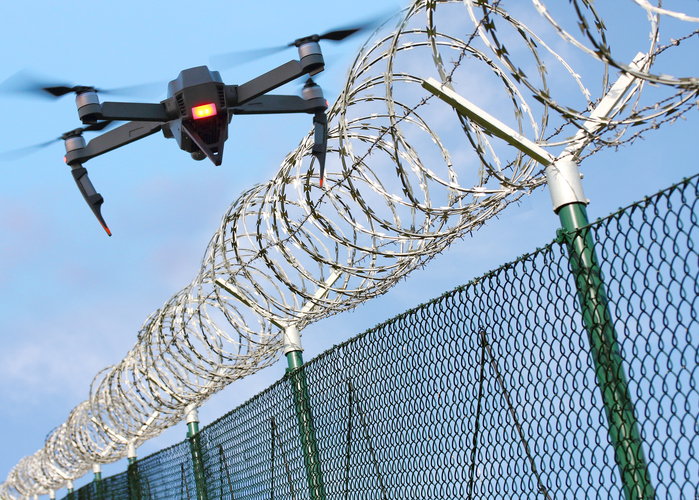
Image Credit: iStock / bjorn999 | Imagery Disclaimer

Securing Tomorrow: Your Daily Dose of Cyber Safety, Tech Trends, National Security News, and Inspiration.

“This is a universe that does not favor the timid.”


-Socrates

I. National Security: Key developments in national security, particularly cyber and technological warfare.

  • Inside Anduril’s Bolt-M Kamikaze Drone Program

  • Anduril’s Bolt‑M loitering‑munition drone, now slated for a $23.9 million U.S. Marine Corps contract that will deliver more than 600 systems between February 2026 and April 2027, gives infantry squads a man‑packable, low‑cognitive‑load weapon that can conduct ISR, strike, or return‑to‑base missions with up to 40 minutes of endurance and a 20‑kilometer range; the company designed Bolt‑M to be producible at scale—targeting 175 units per month and surge capacity of 200‑300—while embedding its Lattice software for autonomous flight, rapid software updates, and hardened cybersecurity, and positioning the platform as a middle ground between cheap hobby‑FPV drones and expensive, operator‑intensive systems by offering sealed weather resilience, interchangeable warheads, and swarm‑compatible multi‑asset maneuvers that reduce attrition and increase kill probability for time‑critical targets; Anduril expects the system to support a variety of combat scenarios—from squad‑level anti‑armor engagements to covert ISR support—while remaining adaptable to future demand that could reach thousands of units per month. Click here to read more.

II. Tech Trends: Updates on emerging technology trends shaping the digital world.

  • Report: Apple plans to launch AI-powered wearable pin device as soon as 2027

  • Apple plans to fast‑track an AI‑powered wearable pin, aiming for a 2027 launch with an initial run of twenty million units, signaling modest expectations compared with past hits like AirPods; the company anticipates stiff competition from OpenAI’s upcoming hardware and Meta’s smart‑glasses efforts, while grappling with internal AI setbacks after former lead John Giannandrea’s cautious strategy fell short of delivering a true LLM‑based Siri; recent news reveals Apple will integrate Google’s Gemini large‑language models into Siri and is also developing smart glasses and an in‑home smart display. Click here to read more.


III. Inspiration: Articles centered on faith that offer guidance and reflection.

  • Chris Pratt Declares AI ‘Cannot Be God’ and ‘Will Always Be Limited’

  • Chris Pratt told the Associated Press that AI, being a human creation, will always be flawed and can never replace God, emphasizing that its limits mirror humanity’s own imperfections; while promoting his new film Mercy—where a detective must prove his innocence before an AI judge condemns him—Pratt said he’s cautiously optimistic about AI as a useful tool but worries about its influence on his children, who he keeps away from phones, social media, and screens; he also reiterated his Christian faith, explaining that he will speak openly about Jesus despite potential career risks because raising his four kids with a strong spiritual foundation matters most to him. Click here to read more.
     

IV. Cyber Safety: A focus on the latest cybersecurity threats, tips, or breaches impacting individuals and organizations.

  • The Upside Down is Real: What Stranger Things Teaches Us About Modern Cybersecurity

  • Stranger Things’ final season serves as a vivid metaphor for modern cybersecurity, illustrating how hidden “portals” like unmanaged IoT devices, third‑party cloud links, and legacy OT systems expand an organization’s attack surface and let adversaries slip from the dark web into critical networks; the show’s emphasis on visibility—Joyce’s Christmas‑light signal and the kids’ maps—mirrors the need for continuous, real‑time asset intelligence, risk scoring, and threat analysis, while the heroes’ shift from reactive to proactive tactics reflects best practices such as prioritizing remediation, segmenting vulnerable environments, and iteratively managing risk; ultimately, the series underscores that defeating sophisticated threats requires coordinated teamwork across IT, OT, security, and business leaders, sustained vigilance, and a proactive stance to keep the digital world from descending into an “Upside Down.” Click here to read more.

V. Shield of Israel: Coverage from The Jerusalem Post, providing an Israeli perspective on ongoing conflicts.

  • Israel bets on quantum technology as the computing arms race heats up

  • Israel is accelerating its quantum‑technology program to stay competitive in a global arms race dominated by the United States and China, leveraging a €1.1 billion Horizon Europe grant (2021‑2024) and a national budget that grew from NIS 1.25 billion in 2018 to over NIS 1.7 billion by 2022, while seeking deeper ties with the U.S., EU, and regional partners such as Azerbaijan, Kazakhstan, the UAE and Saudi Arabia; despite these efforts, U.S. investment in Israeli quantum work remains modest (≈ $47 million in 2023) compared with the EU’s vastly larger contributions, and Israel faces infrastructure constraints, uncertain EU‑Israel relations, and the need to develop post‑quantum encryption before NIST mandates a 2030‑2035 transition—experts estimate that a truly universal, error‑corrected quantum computer may still be eight to ten years away. Click here to read more.

THE DAILY PRAETORIAN: Cybersecurity Trends – 1/22/26

THE DAILY PRAETORIAN: Cybersecurity Trends – 1/22/26

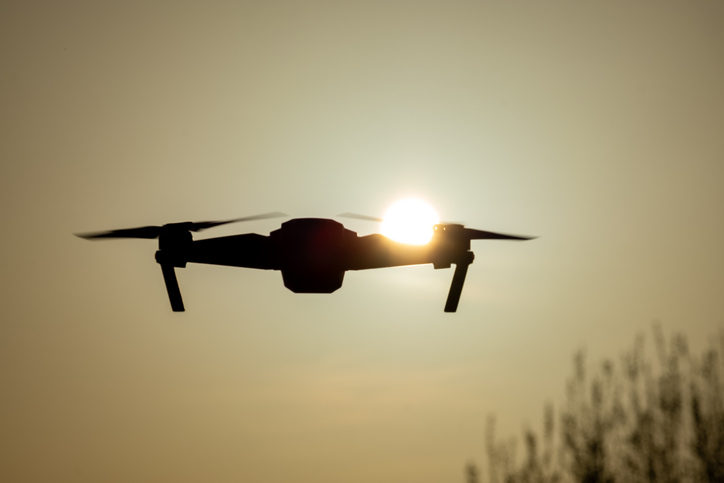
Image Credit: iStock / Denny Kisner | Imagery Disclaimer

Securing Tomorrow: Your Daily Dose of Cyber Safety, Tech Trends, National Security News, and Inspiration.

“Continuous effort – not strength or intelligence – is the key to unlocking our potential.”


-Winston Churchill

I. National Security: Key developments in national security, particularly cyber and technological warfare.

  • Australia Just Took Delivery Of One Of Its Most Powerful Weapons

  • Australia has received its first MC‑55A Peregrine, a heavily modified Gulfstream G550 that the Royal Australian Air Force will use for airborne intelligence, surveillance, reconnaissance and electronic‑warfare missions; the jet landed at RAAF Base Edinburgh after a multi‑leg flight from L3Harris’s Texas facility, bearing the test registration N584GA and the No. 10 Squadron tail marking. The $1.6‑billion AISREW platform carries an extensive antenna farm, a large belly “canoe,” and a bulbous tail cone that likely house AESA arrays and other sensors, giving it up to 15 hours of endurance at 51,000 feet and enabling it to act as a data‑fusion node linking F‑35A, E‑7A Wedgetail, EA‑18G Growler, naval vessels, drones and ground forces. By integrating with Australia’s emerging collaborative combat aircraft concept, the MC‑55 can relay communications, support crewed‑uncrewed teaming with MQ‑28 Ghost Bat drones, and monitor Chinese military activity across the Indo‑Pacific from bases in Edinburgh, Darwin, Townsville and the Cocos Islands. Click here to read more.

II. Tech Trends: Updates on emerging technology trends shaping the digital world.

  • Google begins offering free SAT practice tests powered by Gemini

  • Google has launched a free SAT practice service powered by its Gemini AI, letting students simply ask for a test and receive a fully interactive exam with clickable answers, graphs, and instant score analysis; the tool also offers an “Explain answer” button for each question and a post‑test interface that highlights weak areas and suggests focused study, thanks to collaboration with education partners like The Princeton Review to ensure the content mirrors the real exam. Click here to read more.


III. Inspiration: Articles centered on faith that offer guidance and reflection.

  • Jelly Roll breaks down, shares Gospel message live on Netflix’s ‘Star Search’: ‘Jesus is for everybody’

  • On Netflix’s live “Star Search,” contestant Bear Bailey performed “Hard Fought Hallelujah,” then openly testified that addiction and imperfection had led him to Jesus, prompting judge Jelly Roll to seize the moment and proclaim a gospel of redemption, saying “Jesus is for everybody” and urging viewers to recognize God’s grace; the judges praised Bailey’s emotional delivery—Chrissy Teigen gave four stars while Sarah Michelle Gellar and Jelly Roll each awarded five—and highlighted how the performance turned a reality‑TV stage into a public declaration of faith, underscoring the song’s recent award wins and Jelly Roll’s personal testimony about transformation through Christ. Click here to read more.
     

IV. Cyber Safety: A focus on the latest cybersecurity threats, tips, or breaches impacting individuals and organizations.

  • Redditors ask, Cybernews answers: this is why you should never let browsers remember your password

  • Browsers keep you logged in by storing a cryptographically generated persistent login token as a cookie whenever you tick “Remember me,” allowing you to reopen a device days or months later without re‑entering credentials, but this convenience also creates a long‑lasting credential that attackers can steal to bypass multi‑factor authentication and gain access to sensitive accounts, especially on shared or unsecured devices; Cybernews warns that while the feature isn’t inherently unsafe, it should be used selectively—only on trusted personal devices and for low‑risk services—because stolen cookies can expose personal data, financial information, and corporate resources, whereas high‑value accounts such as email, banking, cloud storage, or work platforms are best protected by requiring fresh logins each session. Click here to read more.

V. Shield of Israel: Coverage from The Jerusalem Post, providing an Israeli perspective on ongoing conflicts.

  • Greece announces cooperation agreement with Israel on anti-drone systems, cybersecurity

  • Greece and Israel have signed a cooperation pact to share expertise on counter‑drone systems and cybersecurity, with Defense Ministers Nikos Dendias and Israel Katz agreeing to exchange know‑how on detecting and neutralizing drone swarms and to coordinate responses to cyber threats; the deal builds on their existing air‑training center, recent joint drills, and a broader trilateral alliance that also includes Cyprus, which recently affirmed a strategic partnership and announced progress on the India‑Middle‑East‑Europe Economic Corridor (IMEC); Greece’s €25‑28 billion defence modernization program will integrate Israeli technologies such as Barak MX, David’s Sling, Spyder and PULS rocket artillery into its new “Achilles’ Shield” air‑defence network, bolstering deterrence against regional challenges. Click here to read more.

THE DAILY PRAETORIAN: Cybersecurity Trends – 1/21/26

THE DAILY PRAETORIAN: Cybersecurity Trends – 1/21/26

Image Credit: U.S. Department of War (DoW) / Air Force | Imagery Disclaimer

Securing Tomorrow: Your Daily Dose of Cyber Safety, Tech Trends, National Security News, and Inspiration.

“The die is cast”


-Julius Caesar

I. National Security: Key developments in national security, particularly cyber and technological warfare.

  • U.S. Military Buildup In The Middle East Grinds On (Updated)

  • President Donald Trump insists the United States has not ruled out a kinetic strike against Iran after the regime’s brutal crackdown on protesters, while the Pentagon accelerates a Middle‑East buildup that includes the USS Abraham Lincoln carrier strike group steaming westward, F‑15E fighters and C‑17 cargo planes flying from RAF Lakenheath, and additional Patriot and THAAD air‑defense systems heading to the region; at the same time, Iran endures a nationwide internet blackout, its armed forces issue direct threats against Trump, and Israel warns it can absorb a massive Iranian missile barrage if a U.S.‑backed regime change materializes, leaving the area on edge as diplomatic and military options swirl. click here to read more.

II. Tech Trends: Updates on emerging technology trends shaping the digital world.

  • Has Gemini surpassed ChatGPT? We put the AI models to the test.

  • Ars Technica pits OpenAI’s ChatGPT 5.2 against Google’s Gemini 3.2 Fast across a suite of prompts—dad jokes, a math word problem, a Lincoln‑basketball story, a short biography, a delicate email, medical advice, Super Mario troubleshooting, and a 737 landing guide—then scores each response for accuracy, clarity, creativity and usefulness. Gemini secures four wins, a tie, and only one loss, outshining ChatGPT on factual detail, unit consistency and source citation while avoiding the hallucinations that marred ChatGPT’s biography and math calculations; ChatGPT, however, edges Gemini on humor and narrative flair. The results illustrate how Google has narrowed the gap with OpenAI, a factor that likely swayed Apple’s decision to power Siri with Gemini. click here to read more.


III. Inspiration: Articles centered on faith that offer guidance and reflection.

  • Minnesota Church Vows to Keep Preaching Gospel Despite Protesters’ Disruption

  • Cities Church in St. Paul, Minnesota, denounced a group of anti‑ICE demonstrators who stormed its Sunday service, marched to the pulpit and shouted slogans, frightening families and children; pastor Jonathan Parnell issued a statement affirming the congregation’s commitment to continue preaching the gospel, calling the intrusion unlawful, an attack on religious liberty, and urging local, state and federal officials to protect the right to worship without interference while the church consults legal counsel; Minnesota Governor Tim Walz and the U.S. Department of Justice both condemned the disruption and announced an investigation. click here to read more.
     

IV. Cyber Safety: A focus on the latest cybersecurity threats, tips, or breaches impacting individuals and organizations.

  • Europe plans to phase out high-risk suppliers and China’s Huawei isn’t happy

  • The European Commission proposes revising the EU Cybersecurity Act to phase out components and equipment from “high‑risk” suppliers in 18 critical sectors—including telecom, automotive, energy, water, drones, cloud services, medical devices and semiconductors—within a three‑year window for mobile operators, with later timelines for fixed networks; the draft, aimed at bolstering tech sovereignty and cyber‑attack resilience, draws criticism from China’s Huawei, which argues the measures violate fairness, non‑discrimination, WTO rules and constitute protectionism, while the EU stresses that any restrictions will follow formal risk assessments and market analyses. click here to read more.

V. Shield of Israel: Coverage from The Jerusalem Post, providing an Israeli perspective on ongoing conflicts.

  • WSJ publishes Iran FM’s most direct threat to Trump that dismisses violent protest crackdown

  • Iranian Foreign Minister Abbas Araghchi published a stark op‑ed in the Wall Street Journal, warning that Iran will fire back with “everything we have” if the United States attacks, and insisting the warning reflects reality, not a threat. He blames Israel and U.S. proxies for any escalation, claims the two nations were close to a “middle‑way” deal in Oman that collapsed, and accuses Washington of pursuing sanctions, cyber assaults, and potential military action. Araghchi also portrays the recent Iranian protests as hijacked by foreign‑backed terrorists, denying reports of a massive civilian crackdown that human‑rights groups estimate has killed thousands and led to tens of thousands of arrests. While he asserts Iran prefers peace and remains ready for genuine negotiations, the piece sparked controversy and led to his exclusion from the Davos summit. click here to read more.

THE DAILY PRAETORIAN: Cybersecurity Trends – 1/20/26

THE DAILY PRAETORIAN: Cybersecurity Trends – 1/20/26

Image Credit: iStock / lucky-photographer | Imagery Disclaimer

Securing Tomorrow: Your Daily Dose of Cyber Safety, Tech Trends, National Security News, and Inspiration.

“The price of liberty is eternal vigilance.”


-Thomas Jefferson

I. National Security: Key developments in national security, particularly cyber and technological warfare.

  • Pentagon funding deal includes $8B hike and support for NATO


  • Lawmakers passed a $839 billion defense spending bill that adds roughly $8 billion beyond the Trump administration’s request, funding a 3.8 % pay raise for troops, a 1 % civilian salary increase, and a total force of 1.3 million active‑duty personnel plus 765 000 reservists; the measure also earmarks $6 billion for Navy shipbuilding, $2 billion for munitions, $1 billion for health programs, $130 million for Marine Corps barracks upgrades, $400 million for Ukraine security assistance, and $200 million for the Baltic Security Initiative, while reaffirming strong congressional support for NATO and its 5 % GDP defense‑spending goal. click here to read more.

II. Tech Trends: Updates on emerging technology trends shaping the digital world.

  • 10 things I learned from burning myself out with AI coding agents

  • Benj Edwards spent two months using Claude Code, Claude Opus 4.5, and other AI coding agents to build more than 50 hobby projects, discovering that these tools amplify human ideas but still require skilled developers to guide, debug, and maintain code; he found AI excels at generating quick prototypes yet falters on novel or low‑level tasks, suffers from brittleness outside its training data, and often triggers feature creep that overwhelms users; the first 90 percent of a project progresses rapidly, while the final 10 percent demands tedious, human‑led refinement, and the speed of AI‑generated software can both excite and intimidate creators; Edwards concludes that AI agents will not replace programmers but will make them busier, serving as powerful assistants that need clear prompts, solid architecture, and continual human oversight. click here to read more.


III. Inspiration: Articles centered on faith that offer guidance and reflection.

  • Postgame Prayer Between Patriots, Texans Goes Viral and Draws Praise: ‘More of This, Please!’

  • NFL quarterbacks C.J. Stroud and Drake Maye led their teammates in a post‑game prayer after the Patriots defeated the Texans 28‑16 in a divisional‑round playoff, and the clip went viral on ESPN’s social channels, drawing millions of views and enthusiastic comments praising the display of faith; both players regularly reference Jesus on their social media, and Stroud thanked Christ during his press conference despite throwing four interceptions, while fans called for more moments like this. click here to read more.
     

IV. Cyber Safety: A focus on the latest cybersecurity threats, tips, or breaches impacting individuals and organizations.

  • Tech hero releases tool that disables AI, ads, and other junk in Chrome, Edge, and Firefox

  • Developer Corbin Davenport releases “Just the Browser,” a script that edits hidden group‑policy settings to strip Chrome, Edge, and Firefox of AI features, telemetry, sponsored content, and other unwanted integrations; the tool works on Windows, Linux, and macOS without adding extensions, letting users keep mainstream browsers while disabling coupon pop‑ups, AI‑generated suggestions, and clickbait feeds, though it currently lacks support for mobile devices. click here to read more.

V. Shield of Israel: Coverage from The Jerusalem Post, providing an Israeli perspective on ongoing conflicts.

  • Fate of Iran’s protest revolution rests on Trump and US military aid – analysis

  • Iran’s massive protests peaked in early January, but a brutal crackdown that killed thousands and jailed tens of thousands has likely stalled any chance of toppling Supreme Leader Ayatollah Khamenei unless President Donald Trump orders a military intervention; after briefly hinting at help, Trump aborted a strike amid doubts about targets, limited U.S. resources, and opposition from Arab states and Israel, while the USS Abraham Lincoln carrier moves toward the region and Tehran eases its repression to avoid provoking a U.S. attack. Analysts outline five U.S. options—symbolic strikes, assaults on the IRGC and Basij, attacks on missile and nuclear sites, cyber operations, or supporting provincial autonomy—each with distinct risks and limited prospects for quickly overturning the regime. click here to read more.

Pin It on Pinterest