
by NETPRAETOR | Jan 21, 2026 | THE DAILY PRAETORIAN
Image Credit: U.S. Department of War (DoW) / Air Force | Imagery Disclaimer
Securing Tomorrow: Your Daily Dose of Cyber Safety, Tech Trends, National Security News, and Inspiration.
“The die is cast”
-Julius Caesar
I. National Security: Key developments in national security, particularly cyber and technological warfare.
-
U.S. Military Buildup In The Middle East Grinds On (Updated)
-
President Donald Trump insists the United States has not ruled out a kinetic strike against Iran after the regime’s brutal crackdown on protesters, while the Pentagon accelerates a Middle‑East buildup that includes the USS Abraham Lincoln carrier strike group steaming westward, F‑15E fighters and C‑17 cargo planes flying from RAF Lakenheath, and additional Patriot and THAAD air‑defense systems heading to the region; at the same time, Iran endures a nationwide internet blackout, its armed forces issue direct threats against Trump, and Israel warns it can absorb a massive Iranian missile barrage if a U.S.‑backed regime change materializes, leaving the area on edge as diplomatic and military options swirl.
click here to read more.
II. Tech Trends: Updates on emerging technology trends shaping the digital world.
-
Has Gemini surpassed ChatGPT? We put the AI models to the test.
-
Ars Technica pits OpenAI’s ChatGPT 5.2 against Google’s Gemini 3.2 Fast across a suite of prompts—dad jokes, a math word problem, a Lincoln‑basketball story, a short biography, a delicate email, medical advice, Super Mario troubleshooting, and a 737 landing guide—then scores each response for accuracy, clarity, creativity and usefulness. Gemini secures four wins, a tie, and only one loss, outshining ChatGPT on factual detail, unit consistency and source citation while avoiding the hallucinations that marred ChatGPT’s biography and math calculations; ChatGPT, however, edges Gemini on humor and narrative flair. The results illustrate how Google has narrowed the gap with OpenAI, a factor that likely swayed Apple’s decision to power Siri with Gemini. click here to read more.
III. Inspiration: Articles centered on faith that offer guidance and reflection.
-
Minnesota Church Vows to Keep Preaching Gospel Despite Protesters’ Disruption
- Cities Church in St. Paul, Minnesota, denounced a group of anti‑ICE demonstrators who stormed its Sunday service, marched to the pulpit and shouted slogans, frightening families and children; pastor Jonathan Parnell issued a statement affirming the congregation’s commitment to continue preaching the gospel, calling the intrusion unlawful, an attack on religious liberty, and urging local, state and federal officials to protect the right to worship without interference while the church consults legal counsel; Minnesota Governor Tim Walz and the U.S. Department of Justice both condemned the disruption and announced an investigation. click here to read more.
IV. Cyber Safety: A focus on the latest cybersecurity threats, tips, or breaches impacting individuals and organizations.
-
Europe plans to phase out high-risk suppliers and China’s Huawei isn’t happy
- The European Commission proposes revising the EU Cybersecurity Act to phase out components and equipment from “high‑risk” suppliers in 18 critical sectors—including telecom, automotive, energy, water, drones, cloud services, medical devices and semiconductors—within a three‑year window for mobile operators, with later timelines for fixed networks; the draft, aimed at bolstering tech sovereignty and cyber‑attack resilience, draws criticism from China’s Huawei, which argues the measures violate fairness, non‑discrimination, WTO rules and constitute protectionism, while the EU stresses that any restrictions will follow formal risk assessments and market analyses. click here to read more.
V. Shield of Israel: Coverage from The Jerusalem Post, providing an Israeli perspective on ongoing conflicts.
-
WSJ publishes Iran FM’s most direct threat to Trump that dismisses violent protest crackdown
-
Iranian Foreign Minister Abbas Araghchi published a stark op‑ed in the Wall Street Journal, warning that Iran will fire back with “everything we have” if the United States attacks, and insisting the warning reflects reality, not a threat. He blames Israel and U.S. proxies for any escalation, claims the two nations were close to a “middle‑way” deal in Oman that collapsed, and accuses Washington of pursuing sanctions, cyber assaults, and potential military action. Araghchi also portrays the recent Iranian protests as hijacked by foreign‑backed terrorists, denying reports of a massive civilian crackdown that human‑rights groups estimate has killed thousands and led to tens of thousands of arrests. While he asserts Iran prefers peace and remains ready for genuine negotiations, the piece sparked controversy and led to his exclusion from the Davos summit. click here to read more.

by NETPRAETOR | Jan 20, 2026 | THE DAILY PRAETORIAN
Image Credit: iStock / lucky-photographer | Imagery Disclaimer
Securing Tomorrow: Your Daily Dose of Cyber Safety, Tech Trends, National Security News, and Inspiration.
“The price of liberty is eternal vigilance.”
-Thomas Jefferson
I. National Security: Key developments in national security, particularly cyber and technological warfare.
-
Pentagon funding deal includes $8B hike and support for NATO
-
Lawmakers passed a $839 billion defense spending bill that adds roughly $8 billion beyond the Trump administration’s request, funding a 3.8 % pay raise for troops, a 1 % civilian salary increase, and a total force of 1.3 million active‑duty personnel plus 765 000 reservists; the measure also earmarks $6 billion for Navy shipbuilding, $2 billion for munitions, $1 billion for health programs, $130 million for Marine Corps barracks upgrades, $400 million for Ukraine security assistance, and $200 million for the Baltic Security Initiative, while reaffirming strong congressional support for NATO and its 5 % GDP defense‑spending goal.
click here to read more.
II. Tech Trends: Updates on emerging technology trends shaping the digital world.
-
10 things I learned from burning myself out with AI coding agents
-
Benj Edwards spent two months using Claude Code, Claude Opus 4.5, and other AI coding agents to build more than 50 hobby projects, discovering that these tools amplify human ideas but still require skilled developers to guide, debug, and maintain code; he found AI excels at generating quick prototypes yet falters on novel or low‑level tasks, suffers from brittleness outside its training data, and often triggers feature creep that overwhelms users; the first 90 percent of a project progresses rapidly, while the final 10 percent demands tedious, human‑led refinement, and the speed of AI‑generated software can both excite and intimidate creators; Edwards concludes that AI agents will not replace programmers but will make them busier, serving as powerful assistants that need clear prompts, solid architecture, and continual human oversight. click here to read more.
III. Inspiration: Articles centered on faith that offer guidance and reflection.
-
Postgame Prayer Between Patriots, Texans Goes Viral and Draws Praise: ‘More of This, Please!’
- NFL quarterbacks C.J. Stroud and Drake Maye led their teammates in a post‑game prayer after the Patriots defeated the Texans 28‑16 in a divisional‑round playoff, and the clip went viral on ESPN’s social channels, drawing millions of views and enthusiastic comments praising the display of faith; both players regularly reference Jesus on their social media, and Stroud thanked Christ during his press conference despite throwing four interceptions, while fans called for more moments like this. click here to read more.
IV. Cyber Safety: A focus on the latest cybersecurity threats, tips, or breaches impacting individuals and organizations.
-
Tech hero releases tool that disables AI, ads, and other junk in Chrome, Edge, and Firefox
- Developer Corbin Davenport releases “Just the Browser,” a script that edits hidden group‑policy settings to strip Chrome, Edge, and Firefox of AI features, telemetry, sponsored content, and other unwanted integrations; the tool works on Windows, Linux, and macOS without adding extensions, letting users keep mainstream browsers while disabling coupon pop‑ups, AI‑generated suggestions, and clickbait feeds, though it currently lacks support for mobile devices. click here to read more.
V. Shield of Israel: Coverage from The Jerusalem Post, providing an Israeli perspective on ongoing conflicts.
-
Fate of Iran’s protest revolution rests on Trump and US military aid – analysis
-
Iran’s massive protests peaked in early January, but a brutal crackdown that killed thousands and jailed tens of thousands has likely stalled any chance of toppling Supreme Leader Ayatollah Khamenei unless President Donald Trump orders a military intervention; after briefly hinting at help, Trump aborted a strike amid doubts about targets, limited U.S. resources, and opposition from Arab states and Israel, while the USS Abraham Lincoln carrier moves toward the region and Tehran eases its repression to avoid provoking a U.S. attack. Analysts outline five U.S. options—symbolic strikes, assaults on the IRGC and Basij, attacks on missile and nuclear sites, cyber operations, or supporting provincial autonomy—each with distinct risks and limited prospects for quickly overturning the regime. click here to read more.

by NETPRAETOR | Jan 16, 2026 | THE DAILY PRAETORIAN
Securing Tomorrow: Your Daily Dose of Cyber Safety, Tech Trends, National Security News, and Inspiration.
“Not everything that is faced can be changed. But nothing can be changed until it is faced.”
—James Baldwin
I. National Security: Key developments in national security, particularly cyber and technological warfare.
-
Navy’s New Frigate Program Makes Big Bet On Containers Loaded With Missiles
-
The U.S. Navy’s new FF(X) frigate program bets on containerized weapons to compensate for the ship’s lack of an integrated vertical launch system, fitting the hull of the Coast Guard’s Legend‑class cutter with a 57 mm gun, a 30 mm cannon, RAM point‑defense missiles, and a Sea Giraffe radar while reserving the stern for modular payloads such as up to 16 Naval Strike Missiles or 48 Hellfire rockets housed in shipping containers; designers stress that these “capability‑in‑a‑box” modules can be swapped out as needs evolve, allowing rapid upgrades and risk reduction, though critics note the ships currently lack sonar, robust anti‑air defenses and a built‑in VLS, limiting their independent combat utility until future iterations add more sensors, missiles and unmanned companion vessels.
click here to read more.
II. Tech Trends: Updates on emerging technology trends shaping the digital world.
-
RAM shortage chaos expands to GPUs, high-capacity SSDs, and even hard drives
-
RAM shortages drive up prices for GPUs, high‑capacity SSDs, and even hard drives, forcing gamers and builders to pay premiums well above MSRP; RTX 5070 cards now sell for about $560‑$570 versus their $549 list price, while Radeon RX 9070 models hover near $580 against a $549 MSRP, and premium RTX 5070 Ti and 5080 cards climb to $730‑$750; SSDs follow suit, with 1 TB M.2 drives costing $120‑$150, roughly double last year’s prices, and larger capacities see even steeper hikes, squeezing consumers who already grapple with soaring DDR5 RAM costs. click here to read more.
III. Inspiration: Articles centered on faith that offer guidance and reflection.
-
When 2026 is uncertain, remember that God is not
- Ezra teaches that humility, reliance on God, and confident prayer guide every journey, urging believers to fast, ask for divine protection, and trust that God answers prayers—even when outcomes differ from expectations; his example shows that true safety comes from God, not earthly armies, a lesson readers can apply as they step into the uncertainties of 2026. click here to read more.
IV. Cyber Safety: A focus on the latest cybersecurity threats, tips, or breaches impacting individuals and organizations.
-
Cyber Insights 2026: Social Engineering
- AI‑powered social engineering now automates hyper‑personalized attacks at scale, using deepfake video and voice, synthetic personas, and agentic large‑language models that scout targets, craft convincing lures, and manage command‑and‑control infrastructure without human input; criminals deploy these tools in phishing‑as‑a‑service kits, browser‑based “ClickFix” tricks, and AI‑generated financial scams, making detection increasingly unreliable and forcing defenders to pivot toward zero‑trust workflows, multi‑person approvals, and continuous verification rather than relying on traditional detection methods. click here to read more.
V. Shield of Israel: Coverage from The Jerusalem Post, providing an Israeli perspective on ongoing conflicts.
-
If Israel falls, we fall’: Fate of West tied to Israel, former French PM tells ‘Post’ – interview
-
Former French prime minister Manuel Valls tells the Jerusalem Post that Europe’s fate hinges on Israel’s survival, arguing that a defeat of Israel would imperil the West’s fight against Islamism, Iranian‑Russian ties, and antisemitism; he stresses that supporting Israel counters modern antisemitism, criticizes left‑wing parties for exploiting the issue, and calls France’s 2025 recognition of a Palestinian state a mistake, urging a security‑first two‑state solution backed by Arab partners. click here to read more.
by NETPRAETOR | Jan 15, 2026 | THE DAILY PRAETORIAN
Image Credit: iStock / VanderWolf-Images | Imagery Disclaimer
Securing Tomorrow: Your Daily Dose of Cyber Safety, Tech Trends, National Security News, and Inspiration.
“Fortune favors the bold.”
-Terence
I. National Security: Key developments in national security, particularly cyber and technological warfare.
-
Lockheed delivered record 191 F-35s as it cleared out TR-3 backlog
-
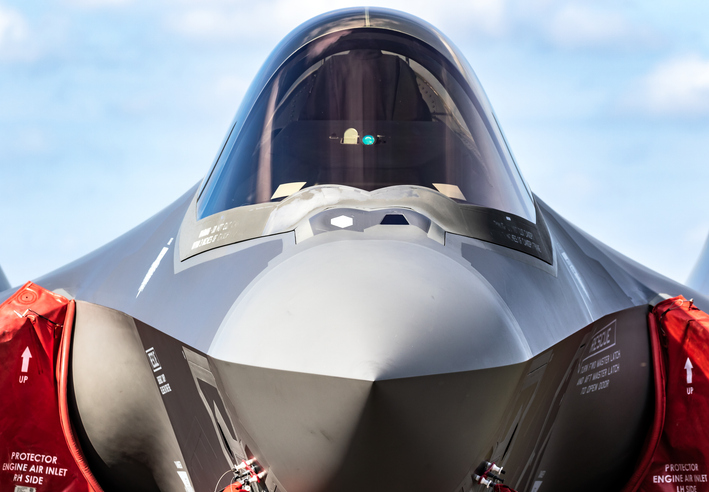
Lockheed Martin delivered a record 191 F‑35 Joint Strike Fighters in 2025, surpassing the previous high of 142 in 2021, after clearing a backlog caused by delays in the Technology Refresh 3 (TR‑3) upgrade that forced the Department of Defense to pause deliveries for a year; the truncated TR‑3 software eventually allowed production to resume in July 2024, and the company completed the backlog in May 2025, while the F‑35 fleet now totals about 1,300 aircraft worldwide with over 1 million flight hours, having supported operations such as the midnight‑hammer strikes on Iran and NATO engagements over Russian drones in Poland.
click here to read more.
II. Tech Trends: Updates on emerging technology trends shaping the digital world.
-
Spotify’s 3rd price hike in 2.5 years hints at potential new normal
-
Spotify raises its Premium monthly fee from $12 to $13, with student, Duo, and Family plans also climbing by $1‑$2, marking the third price increase in 2½ years after hikes in July 2023 and July 2024; the company cites the need to fund new features such as lossless audio, music videos, messaging tools, joint‑listening “Jams,” and a new Hollywood podcast studio, positioning the adjustments as necessary to sustain its service quality and support artists. click here to read more.
III. Inspiration: Articles centered on faith that offer guidance and reflection.
-
Brandon Lake Takes ‘Good Morning America’ to Church, Says He’s Pointing People ‘to Jesus’
- Grammy‑winning Christian artist Brandon Lake appears on ABC’s Good Morning America, performing his Dove‑Award‑winning song “Hard Fought Hallelujah” and explaining that his goal is to point listeners toward Jesus; he credits his recent collaboration with Jelly Roll for boosting the track’s popularity, jokes that he and Maury Povich both “tell people who the father is,” and emphasizes that faith fuels his music and life, urging viewers to explore the gospel for transformation. click here to read more.
IV. Cyber Safety: A focus on the latest cybersecurity threats, tips, or breaches impacting individuals and organizations.
-
China bets on quantum cyber weapons to win future wars
- China’s People’s Liberation Army tests more than ten quantum cyber‑warfare tools that fuse cloud computing, artificial intelligence, and quantum technology to harvest battlefield intelligence from the public internet at unprecedented speed; researchers at the National University of Defence Technology in Changsha build a unified situational‑awareness system that can map the battlespace, provide ultra‑precise quantum navigation resistant to spoofing, and secure data against cyber threats, signaling a shift from theoretical concepts to operational quantum weapons aimed at dominating future conflicts. click here to read more.
V. Shield of Israel: Coverage from The Jerusalem Post, providing an Israeli perspective on ongoing conflicts.
-
US sanctions Iran officials over protests crackdown, Israel Katz declares Iranian bank terror org.
-
The United States sanctions five Iranian officials—senior security council members, IRGC commanders, and law‑enforcement leaders—accusing them of orchestrating the brutal crackdown on protests, while Treasury Secretary Scott Bessent vows to trace and freeze funds the regime wires abroad; concurrently, Israeli Defense Minister Israel Katz declares the state‑run Bank Melli a terrorist organization, echoing a 2018 U.S. designation and aiming to choke the bank’s role in sanction evasion and financing of Iranian proxies, as the Treasury also targets 18 individuals and shadow‑banking networks linked to illicit oil revenues and labels Fardis Prison a terror entity. click here to read more.

by NETPRAETOR | Jan 14, 2026 | THE DAILY PRAETORIAN
Securing Tomorrow: Your Daily Dose of Cyber Safety, Tech Trends, National Security News, and Inspiration.
“Far and away the best prize that life has to offer is the chance to work hard at work worth doing.”
-Theodore Roosevelt
I. National Security: Key developments in national security, particularly cyber and technological warfare.
-
What is a Lucky Box and why is there one at the Pentagon?
-
The Pentagon now houses a Lucky Box vending machine in its main food court, where anyone can drop a few bucks into a slot and walk away with a sealed mystery prize that might be a coveted Pokémon pack, an autographed sports relic or even a Muhammad Ali‑signed glove—though most pulls turn out to be modest surprises; the company behind the machines announced the installation on Christmas Eve and called the Pentagon a “milestone moment,” while Pentagon spokeswoman Sue Gough confirmed the unit has been operating since Dec. 23, sparking curiosity among service members and visitors alike who enjoy a quick gamble while grabbing lunch, even if the defense department’s budget quirks sometimes draw a raised eyebrow; the novelty has already generated buzz on social‑media accounts like U.S. Army W.T.F! Moments, inviting anyone with a taste for chance to try their luck in the heart of America’s biggest military hub.
Click here to read more.
II. Tech Trends: Updates on emerging technology trends shaping the digital world.
-
OpenAI to buy compute power from Cerebras in deal worth more than $10 billion, source says
-
OpenAI signs a multi‑year contract to buy up to 750 megawatts of compute power from Cerebras, a deal valued at more than $10 billion that will be delivered in phases through 2028 to accelerate ChatGPT’s response speed; the agreement diversifies Cerebras’s revenue away from its UAE partner G42, showcases the industry’s appetite for massive AI‑training hardware, and aligns with OpenAI’s broader plan to secure tens of gigawatts of compute for future models while it prepares for a potential IPO. click here to read more.
III. Inspiration: Articles centered on faith that offer guidance and reflection.
-
As Iran Cracks Down on Protests, Christians Speak Up
- Iranian Christians, many of whom fled persecution decades ago, now publicly support the nationwide protests against the regime, sharing messages of solidarity, praying for justice, and urging U.S. President Donald Trump to intervene; they recount personal histories of imprisonment, describe how the crackdown has killed thousands and shut down the internet, and note that churches inside Iran are increasingly vocal, using prayer calls and social media to rally believers while warning that Christians face heightened risk of accusations and imprisonment as the government blames foreign influence. click here to read more.
IV. Cyber Safety: A focus on the latest cybersecurity threats, tips, or breaches impacting individuals and organizations.
-
Verizon down for nearly 200K users, teams deployed on the ground
- Verizon and several other carriers experienced a nationwide outage Wednesday, leaving tens of thousands of users without voice, data, and internet service as engineers raced to restore connectivity; the disruption peaked around 1 p.m., heavily affecting East‑Coast cities like New York, Philadelphia, Atlanta, Miami, and Charlotte, and even knocked out 911 emergency calls in New York City and Washington, DC, prompting officials to advise residents to use alternate carriers or landlines, while the FCC announced it will investigate the incident. click here to read more.
V. Shield of Israel: Coverage from The Jerusalem Post, providing an Israeli perspective on ongoing conflicts.
-
Iran closes airspace as Western military official says signals show US attack ‘imminent’
-
Iran shuts its airspace to all flights after a NOTAM warns that a U.S. attack may be imminent, prompting flight‑tracker maps to show aircraft fleeing the skies over Iran and Iraq; a Western military official tells Reuters that unpredictable U.S. behavior keeps adversaries on edge, while President Trump says the U.S. will monitor the situation after claiming recent killings in Iran have ceased; meanwhile, Poland, Italy and the United Kingdom urge their citizens to leave Iran, the British embassy in Tehran closes temporarily, and the United States withdraws personnel from its Al Udeid base in Qatar as Tehran threatens retaliation against U.S. bases in the region. click here to read more.
