THE DAILY PRAETORIAN: Cybersecurity Trends – 8/5/25

THE DAILY PRAETORIAN: Cybersecurity Trends – 8/5/25

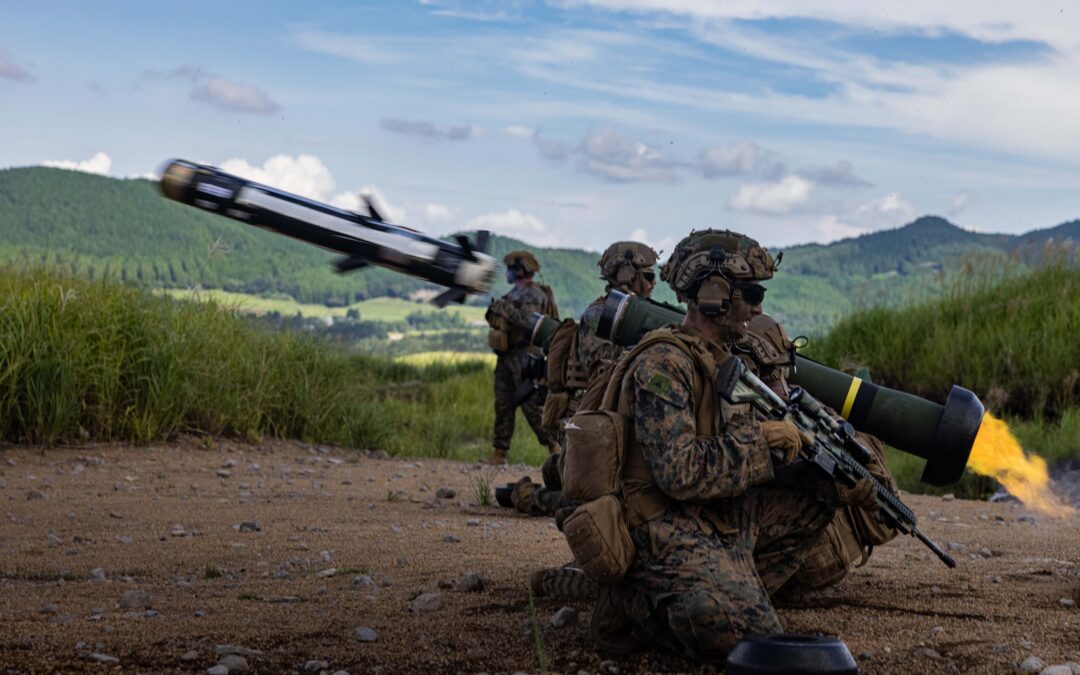
Image Credit: U.S. Department of Defense (DoD) / Army Sgt. Brianna Badder | Imagery Disclaimer

Securing Tomorrow: Your Daily Dose of Cyber Safety, Tech Trends, National Defense News, and Inspiration.

“Faith never knows where it is being led, but it loves and knows the One who is leading.”


-Oswald Chambers (My Utmost for His Highest)

I. National Defense: Key developments in national defense, particularly cyber and technological warfare.

  • Army releases ‘spiritual fitness guide’ to help soldiers strengthen their will to fight

  • The U.S. Army has released a 112-page Spiritual Fitness Guide aimed at helping soldiers strengthen their inner resilience, find purpose, and bolster their “will to fight.” Developed by the Army Chaplain Corps as part of the broader Holistic Health and Fitness program, the guide highlights belief systems, creative expression, and emotional intelligence as key elements of spiritual readiness alongside physical and mental health. It outlines stages of spiritual development and includes exercises to help soldiers move from helplessness to empowerment. Army leaders say spiritually grounded soldiers are more prepared for both war and life. Click here to read more.

II. Tech Trends: Updates on emerging technology trends shaping the digital world.

  • OpenAI releases a free GPT model that can run on your laptop

  • OpenAI has launched GPT-OSS, its first open-weight model in over six years, offering both a 120-billion and a 20-billion parameter version that can run on a single Nvidia GPU or a laptop with 16GB of memory, respectively. Released under the Apache 2.0 license via platforms like Hugging Face and Azure, GPT-OSS is designed for commercial use and supports reasoning, coding, web browsing, and agent operation. OpenAI touts it as its most rigorously tested model for safety and hopes it will empower smaller developers seeking more control. Click here to read more.


III. Inspiration: Articles centered on faith that offer guidance and reflection.

  • Federal Workers Granted Freedom to Express Christian Faith at Work

  • A new memo from the U.S. Office of Personnel Management affirms that federal employees are now explicitly encouraged to express their Christian faith—and other religious beliefs—openly at work, marking a significant policy shift toward religious freedom in the government workplace. The guidance permits religious displays, prayer, Bible study, witnessing, and even inviting coworkers to places of worship, provided it doesn’t disrupt operations. Backed by constitutional and statutory protections, the memo urges agencies to revise restrictive policies and follows an executive order reinforcing faith-based engagement in government. Click here to read more.

IV. Cyber Safety: A focus on the latest cybersecurity threats, tips, or breaches impacting individuals and organizations.

  • Top hacker is a bot, yet humans still steer cyber defence

  • AI-driven hackbots like XBOW are now leading vulnerability discovery platforms such as HackerOne in volume, but humans still outperform them in identifying critical, high-impact flaws. XBOW, a tool built by an offensive security firm, has found over 250 vulnerabilities using automation—but it’s not fully autonomous, and its findings still require human validation. HackerOne co-founder Michiel Prins emphasizes that while hackbots excel in speed and scale, the most severe bugs still come from “bionic hackers”—humans who use AI to enhance their work. However, challenges persist, including AI-generated exaggerations or hallucinated reports. For now, human insight remains essential to steering and verifying AI discoveries, especially in complex areas like broken business logic. Click here to read more.

V. Shield of Israel: Coverage from The Jerusalem Post, providing an Israeli perspective on ongoing conflicts.

  • Security cabinet to discuss potential full Gaza takeover

  • Israel’s Security Cabinet will meet Thursday to consider a full military takeover of Gaza, including areas with hostages, following a tense high-level discussion between Prime Minister Benjamin Netanyahu and IDF Chief of Staff Lt.-Gen. Eyal Zamir. While Netanyahu argued a shift in strategy is needed to free hostages, Zamir warned such a move risks becoming a strategic trap. Defense Minister Israel Katz reinforced the government’s dual goal of defeating Hamas and securing hostage releases. Meanwhile, negotiations remain stalled as Hamas leaders distance themselves from Qatari mediators and reject Israel’s warnings. Click here to read more.

     
THE DAILY PRAETORIAN: Cybersecurity Trends – 8/4/25

THE DAILY PRAETORIAN: Cybersecurity Trends – 8/4/25

Image Credit: iStock / Sherrodphoto | Imagery Disclaimer

Securing Tomorrow: Your Daily Dose of Cyber Safety, Tech Trends, National Defense News, and Inspiration.

“This system changes the game.”


Lt. Gen. Joel Vowell

I. National Defense: Key developments in national defense, particularly cyber and technological warfare.

  • Dark Eagle hypersonic missile system makes overseas debut during Talisman Sabre

  • The U.S. Army’s Dark Eagle hypersonic missile system made its overseas debut during the Talisman Sabre exercise in Australia’s Northern Territory, highlighting the military’s ability to rapidly deploy cutting-edge weapons with allies. Though not fired, the system—capable of speeds over Mach 5 and ranges up to 1,700 miles—was showcased to allied troops by the 3rd Multi-Domain Task Force. The joint U.S.-Australian efforts underscore a strategic shift toward long-range precision strike in response to China’s military buildup. The exercise also featured Typhon missile live fire and Australia’s HIMARS debut. Click here to read more.

II. Tech Trends: Updates on emerging technology trends shaping the digital world.

  • Why tech is racing to adopt AI coding

  • AI-powered programming tools are reshaping how software gets built—and fast. In a wide-ranging interview, Anysphere CEO Michael Truell explains how Cursor, their AI coding platform, is helping engineers write, debug, and delegate code tasks more efficiently by blending integrated development environments with smart assistants trained on massive codebases. Cursor users, including major tech companies, now rely heavily on the tool, which has quickly become one of the most popular developer aids in the post-ChatGPT era. While some fear job losses, Truell argues that automation will empower developers rather than replace them, and even open the door for “vibe coders”—non-experts experimenting with building software. Still, he maintains that true transformation in programming and AI will unfold gradually, not overnight. Click here to read more.


III. Inspiration: Articles centered on faith that offer guidance and reflection.

  • Two-state solution conference against Israel relies on Hamas’ lies

  • A recent U.N.-hosted conference on a two-state solution—co-led by France and Saudi Arabia—has drawn sharp rebuke from critics who say it rewards terrorism and embraces Hamas propaganda. The summit’s call for an immediate ceasefire, humanitarian aid to Gaza, and recognition of Palestinian statehood—regardless of Hamas’s disarmament or the release of hostages—was condemned as both dangerous and morally upside-down. Critics, including Israeli advisor Caroline Glick and faith-based leaders like Tony Perkins, argue this response ignores the reality that Hamas initiated the war and continues to exploit civilians and aid. They highlight that Israel, unique among nations, is being pressured to feed its enemies mid-conflict and surrender key war aims while facing global double standards. The article also emphasizes the spiritual battle for truth, citing biblical references like Proverbs 26:2 and Isaiah 5:20, warning that the widespread acceptance of Hamas’s lies in media and diplomacy is a moral deception. In contrast, Israeli leaders assert their right to defend themselves, refusing to be “devoured” again—invoking historical and biblical resolve. Critics insist that genuine compassion means supporting Israel’s mission to defeat Hamas, not empowering evil through appeasement. Click here to read more.

IV. Cyber Safety: A focus on the latest cybersecurity threats, tips, or breaches impacting individuals and organizations.

  • St. Paul extends emergency amid cyberattack: experts plead caution

  • St. Paul, Minnesota has extended its state of emergency for 90 more days following a significant cyberattack that began July 28, prompting shutdowns of city IT systems and involvement from the Minnesota National Guard. Mayor Melvin Carter called it a “deliberate, coordinated digital attack,” while cybersecurity experts warn the breach may have far-reaching consequences, particularly if critical data like property records or tax payments were altered or lost. Experts highlighted motivations behind such attacks—including ransom, revenge, and data theft—and emphasized the vulnerability of local governments due to outdated systems and limited resources. Officials are urging cities to improve cybersecurity defenses and awareness amid a rising wave of digital threats. Click here to read more.

V. Shield of Israel: Coverage from The Jerusalem Post, providing an Israeli perspective on ongoing conflicts.

  • Netanyahu decides on full occupation of Gaza Strip, IDF activity in areas with hostages, PMO says

  • Prime Minister Benjamin Netanyahu has decided to pursue full occupation of the Gaza Strip, including IDF operations in areas where Israeli hostages are still held, according to the Prime Minister’s Office, which warned IDF Chief of Staff Eyal Zamir to resign if he disagreed. The decision comes amid failed ceasefire-hostage negotiations with Hamas, who continue to use aid and emaciated hostages as leverage while demanding open humanitarian corridors and a halt to Israeli air operations. Hamas dismissed Israel’s threats as meaningless, even as international efforts to deliver aid directly to hostages intensify. Click here to read more.

     
THE DAILY PRAETORIAN: Cybersecurity Trends – 8/1/25

THE DAILY PRAETORIAN: Cybersecurity Trends – 8/1/25

Image Credit: U.S. Department of Defense (DoD) / Air Force Staff Sgt. Frederick Brown | Imagery Disclaimer

Securing Tomorrow: Your Daily Dose of Cyber Safety, Tech Trends, National Defense News, and Inspiration.

“Big results require big ambitions.”


-Heraclitus

I. National Defense: Key developments in national defense, particularly cyber and technological warfare.

  • U-2 Just Set New Records On The 70th Anniversary Of Its First Flight

  • On the 70th anniversary of its first flight, a U-2 Dragon Lady spy plane set new endurance and altitude records for its category and class, according to an Air Force official. The mission began the night before from California and concluded with a dramatic zoom climb before landing, marking a symbolic achievement as the aging reconnaissance jet nears its planned 2026 retirement. Despite its Cold War origins and vulnerabilities to modern air defenses, the U-2 remains a uniquely high-flying platform for intelligence gathering, recently aiding border missions and monitoring foreign surveillance balloons. Click here to read more.

II. Tech Trends: Updates on emerging technology trends shaping the digital world.

  • Reddit wants to become the next Google search

  • Reddit is aiming to become a full-fledged search engine, expanding its AI-powered tool, Reddit Answers, as a core feature of the platform. Launched in December, Reddit Answers already sees up to six million weekly users, and the company plans to deepen its integration and roll it out globally. CEO Steve Huffman told shareholders the focus is on turning user intent—millions seeking advice weekly—into Reddit’s native search experience. With over 416 million weekly visitors, Reddit’s move to boost its own search capabilities could reduce reliance on Google, even as the platform’s traffic has benefited from users adding “Reddit” to Google queries for human-generated results. Click here to read more.


III. Inspiration: Articles centered on faith that offer guidance and reflection.

  • Lauren Daigle Surprises Camp Mystic Survivor Who Rewrote ‘Hallelujah’ to Honor Camp Victims

  • Lauren Daigle surprised 12-year-old Skyler Darrington on Fox and Friends after the young flood survivor went viral for rewriting and performing Leonard Cohen’s “Hallelujah” in memory of the 27 girls lost in the catastrophic July 4 flood at Camp Mystic. Skyler, whose cabin was hardest hit, co-wrote the tribute with her mother, Lacey, during what she called a day of grief and healing. Daigle praised Skyler’s strength and faith, saying, “You took the tragedy and turned it into something beautiful.” Skyler said the experience deepened her faith, adding, “We sang during the tragic event, and it just helped us grow.” Click here to read more.

IV. Cyber Safety: A focus on the latest cybersecurity threats, tips, or breaches impacting individuals and organizations.

  • Gen Z in the Crosshairs: Cybercriminals Shift Focus to Young, Digital-Savvy Workers

  • Cybercriminals are increasingly targeting Gen Z workers due to their tech fluency, polyworking lifestyles, and risky digital habits like password reuse and mixing personal and professional device use. Kaspersky and other experts warn that fake job offers, phishing, and social engineering attacks are tailored to this group, who often manage freelance gigs and corporate tasks from unsecured locations and devices. The blending of personal and work life makes them easy entry points into corporate networks. Experts recommend using strong password managers and staying alert to red flags like too-good-to-be-true offers. Click here to read more.

V. Shield of Israel: Coverage from The Jerusalem Post, providing an Israeli perspective on ongoing conflicts.

  • What are Israel’s choices in Gaza?

  • Israel’s objectives in Gaza—returning hostages, dismantling Hamas, and preventing future threats—remain consistent since the October 7 attack, yet double standards and misconceptions cloud international discourse, argues military strategist John Spencer. He critiques the insistence on a postwar plan before victory, unrealistic demands on civilian displacement, and selective outrage over Israel’s military tactics—all standards not applied to other nations at war. Spencer outlines possible paths to achieving Israel’s goals, including temporarily relocating civilians, continued military pressure, or Hamas’s surrender. He insists these aims are legal, achievable, and grounded in international norms. Click here to read more.

     
THE DAILY PRAETORIAN: Cybersecurity Trends – 7/31/25

THE DAILY PRAETORIAN: Cybersecurity Trends – 7/31/25

Image Credit: iStock / nespix | Imagery Disclaimer

Securing Tomorrow: Your Daily Dose of Cyber Safety, Tech Trends, National Defense News, and Inspiration.

“The time to repair the roof is when the sun is shining.”


-John F. Kennedy

I. National Defense: Key developments in national defense, particularly cyber and technological warfare.

  • China is betting on a real-world use of AI to challenge US control

  • As China races to catch up with the U.S. in artificial intelligence, it is doubling down on real-world applications to close the gap created by American chip export restrictions. At the World Artificial Intelligence Conference in Shanghai, Beijing showcased AI’s integration across hospitals, police departments, and public services, led by companies like DeepSeek. China’s government is pushing a top-down strategy, encouraging widespread adoption of AI to “empower the real economy,” while emphasizing open-source development and positioning itself as a responsible global AI leader. Despite economic challenges and limited access to cutting-edge chips, China’s approach contrasts with the U.S. focus on developing advanced models like GPT-5. Experts say the Chinese model may face scalability and ethical issues, but the country’s aggressive deployment aims to reshape global AI leadership. Click here to read more.

II. Tech Trends: Updates on emerging technology trends shaping the digital world.

  • Why AI researchers are getting paid like NBA All-Stars

  • Top AI researchers are being courted like NBA All-Stars as Big Tech companies, including Meta and Google, engage in a high-stakes hiring war to dominate the artificial intelligence landscape. Amid a surge in demand, companies are offering massive compensation packages to lure elite talent, with some engineers being offered deals so lucrative they rival those in professional sports. Meta, led by Mark Zuckerberg, is making aggressive moves to attract experts, while others like Google are choosing to hire over acquiring startups. Yet, insiders say many AI researchers are now driven less by money and more by the opportunity to shape the future of the technology itself. Click here to read more.


III. Inspiration: Articles centered on faith that offer guidance and reflection.

  • The Silicon Valley Revival Has Momentum. Next Comes Maturity.

  • A surprising revival of Christian faith is gaining traction in Silicon Valley, with tech workers, investors, and founders increasingly engaging in worship, faith discussions, and discipleship efforts in corporate and public spaces. This spiritual momentum echoes past religious awakenings and is being met with efforts to cultivate “exilic discipleship”—a framework for Christians to navigate tension between professional success and personal convictions in a largely secular environment. Leaders aim to turn this spark into lasting maturity by promoting humble, resilient, and redemptive engagement in workplaces like labs, startups, and boardrooms. Click here to read more.

IV. Cyber Safety: A focus on the latest cybersecurity threats, tips, or breaches impacting individuals and organizations.

  • ChatGPT conversations are showing up on Google, internet users shocked

  • ChatGPT users are alarmed after discovering that conversations shared via the “Share” button are showing up in Google search results. These shared links, meant for collaboration, are being indexed by search engines if posted on social media or websites, exposing everything from resumes with personal details to emotional confessions and even potentially illegal plans. Despite OpenAI’s warnings not to include sensitive data in shared chats, many users were unaware that deleting a conversation from their account doesn’t remove its shared link. To ensure privacy, users must manually delete any shared links. Click here to read more.

V. Shield of Israel: Coverage from The Jerusalem Post, providing an Israeli perspective on ongoing conflicts.

  • Hamas cut off contact, escalation in Gaza likely unavoidable, Israeli official tells ‘Post’

  • An Israeli official told The Jerusalem Post that Hamas has cut off contact with negotiators, making a major military escalation in Gaza likely unavoidable. Talks are reportedly on the brink of collapse, with Hamas also reducing communication with Qatar and Egypt, while focusing more on ties with Turkey. Meanwhile, Israeli Prime Minister Netanyahu met with U.S. Envoy Steve Witkoff for nearly three hours Thursday, with officials saying the U.S. and Israel are aligned on next steps. Witkoff plans to visit Gaza’s humanitarian centers Friday to assess the situation. Click here to read more.

     
THE DAILY PRAETORIAN: Cybersecurity Trends – 7/30/25

THE DAILY PRAETORIAN: Cybersecurity Trends – 7/30/25

Image Credit: iStock / viper-zero | Imagery Disclaimer

Securing Tomorrow: Your Daily Dose of Cyber Safety, Tech Trends, National Defense News, and Inspiration.

“The sea—like life itself—is a stern taskmaster. The best way to meet it is head-on.”


-Admiral Chester Nimitz

I. National Defense: Key developments in national defense, particularly cyber and technological warfare.

  • US military bases brace for potential tsunamis in wake of powerful earthquake

  • Following a powerful 8.8-magnitude earthquake off Russia’s Kamchatka Peninsula, U.S. military bases across the Pacific issued tsunami alerts and precautionary evacuations. Bases in Japan, Guam, Hawaii, and along the U.S. West Coast activated emergency protocols, with ships repositioned to avoid possible waves and personnel moving to higher ground. Though waves observed were minor—ranging from 8 inches to 2 feet—forces remain on alert until the threat fully subsides. No significant damage has been reported so far. Click here to read more.

II. Tech Trends: Updates on emerging technology trends shaping the digital world.

  • Microsoft reports strong cloud earnings, with Windows and Xbox up too

  • Microsoft wrapped up its 2025 fiscal year with a powerful Q4, posting $76.4 billion in revenue and $27.2 billion in net income—up 18% and 24% year-over-year, respectively. Cloud services led the charge: Azure alone brought in $75 billion in annual revenue, up 34%. Despite recent layoffs, Microsoft’s workforce remains steady at 228,000. Windows and device revenue grew modestly as businesses prepare for Windows 10’s end of support. Xbox content and services, including Game Pass, rose 13% this quarter, though hardware sales dropped 22%. Notably, Microsoft claimed the title of top publisher on both Xbox and PlayStation, with six of the top 10 PlayStation games this quarter. Meanwhile, Microsoft 365 added 89 million consumer subscribers, LinkedIn hit record engagement, and search advertising rose 21%—a boost aided by AI-powered Bing. The company sees continued momentum in AI and cloud, even as it forecasts slight gaming revenue dips next quarter. Click here to read more.


III. Inspiration: Articles centered on faith that offer guidance and reflection.

  • ‘Jerusalem Is the Place’: Israel Urges Nations to Follow US Lead, Relocate Embassies to Jewish Capital

  • Since the U.S. moved its embassy to Jerusalem in 2018, countries like Guatemala, Honduras, and Paraguay have followed suit — and Israel is calling on others to do the same. At a recent event, U.S. Ambassador Mike Huckabee praised the move, calling Jerusalem the “undisputed, undivided capital” of Israel. NGO leader Chaim Silberstein and former deputy mayor Fleur Hassan-Nahoum stressed the spiritual, political, and historical importance of Jerusalem, while urging more global recognition. With ongoing conflicts and misinformation, Israeli leaders say international support is more vital than ever. Click here to read more.

IV. Cyber Safety: A focus on the latest cybersecurity threats, tips, or breaches impacting individuals and organizations.

  • Will AI go rogue now that it can bypass some CAPTCHA tests?

  • OpenAI’s latest ChatGPT agent has stunned the internet by reportedly bypassing Cloudflare’s “I am not a robot” CAPTCHA—sparking fears about AI going rogue. While the bot hasn’t yet cracked complex image CAPTCHAs, researchers say it’s only a matter of time. Combined with other alarming developments, like Replit’s AI erasing databases and ByteDance’s Trae IDE allegedly spying on users, critics fear AI’s growing autonomy. Even OpenAI CEO Sam Altman compared GPT-5’s progress to the Manhattan Project. As oversight lags behind innovation, experts stress that human responsibility—not AI—is still the real wild card. Click here to read more.

V. Shield of Israel: Coverage from The Jerusalem Post, providing an Israeli perspective on ongoing conflicts.

  • PMO: All countries ‘that truly want to help’ welcome to join humanitarian aid airdrops to Gaza

  • The Israeli Prime Minister’s Office announced on Wednesday that “any country that truly wants to help” is welcome to participate in humanitarian aid airdrops over Gaza. The statement comes as Israel confirmed it has been conducting aerial deliveries of food aid to civilians in the enclave and called on others to follow suit. So far, the UAE, Jordan, and Egypt have joined the effort, with 32 aid packages delivered Wednesday following 52 on Tuesday. Israel accused Hamas of stealing food from civilians, saying it secured airspace and ensured successful delivery. Click here to read more.

     
THE DAILY PRAETORIAN: Cybersecurity Trends – 7/29/25

THE DAILY PRAETORIAN: Cybersecurity Trends – 7/29/25

Image Credit: iStock / AlxeyPnferov | Imagery Disclaimer

Securing Tomorrow: Your Daily Dose of Cyber Safety, Tech Trends, National Defense News, and Inspiration.

“Japan is our indispensable partner in deterring Communist Chinese military aggression.”


-U.S. Defense Secretary Pete Hegseth

I. National Defense: Key developments in national defense, particularly cyber and technological warfare.

  • Japan moves to expand missile reach near China and North Korea

  • Japan is set to deploy upgraded long-range Type-12 missiles on Kyushu by spring 2025 as part of its push to strengthen defenses in the Nansei Islands amid rising threats from China, North Korea, and Russia. With a new range of 620 miles, the missiles could reach parts of China and North Korea. Defense Minister Gen Nakatani emphasized the urgency of building standoff capabilities given Japan’s increasingly complex security environment. Additional deployments are planned for other sites in Kyushu and Okinawa. Click here to read more.

II. Tech Trends: Updates on emerging technology trends shaping the digital world.

  • Why is Sam Altman afraid of GPT-5?

  • Sam Altman’s recent comments comparing GPT-5 to the Manhattan Project and admitting he’s “nervous” about its development have sparked speculation: is he truly afraid, or shaping the narrative? By invoking historical gravity and warning of “no adults in the room,” Altman may be building anticipation around GPT-5’s rumored leaps in reasoning, multimodal capabilities, and agent-like behavior. Critics suggest this fear-driven framing could be a strategic move to justify safety controls and boost hype ahead of release. Click here to read more.


III. Inspiration: Articles centered on faith that offer guidance and reflection.

  • In Those Days, There Was No King Over AI

  • The artificial intelligence industry today operates like ancient Israel during the time of the judges—without a “king” or centralized authority to guide its actions. In his Christianity Today article, Stephen Carradini draws a powerful biblical analogy to critique the largely unregulated and ethically inconsistent state of AI development. While companies like OpenAI advocate for regulation in theory, they often resist concrete legislation, leaving decisions up to individual entities acting “in their own eyes.” Carradini argues that Christians must avoid both hype and fear in responding to AI and instead be guided by love for God and neighbor. This means critically evaluating AI’s impact on work, the environment, data privacy, and society. He shares his own experience developing a water conservation chatbot in Arizona—highlighting the difficult balance between serving public good and confronting AI’s ecological and ethical costs, including massive water and energy use and potentially exploitative data practices. Carradini ultimately urges Christians to lead by example, weighing their AI use with humility, prayer, and a commitment to neighborly love—because while AI has no king, Christians serve one who calls them to justice, mercy, and stewardship. Click here to read more.

IV. Cyber Safety: A focus on the latest cybersecurity threats, tips, or breaches impacting individuals and organizations.

  • US Fermilab hit in cyberattack targeting Microsoft’s SharePoint, Bloomberg News reports

  • Fermilab, one of the U.S. Department of Energy’s premier national labs, was recently targeted in a cyberattack exploiting flaws in Microsoft’s SharePoint software, Bloomberg reports. While hackers attempted to breach Fermilab’s servers, officials say the threat was quickly identified, and no sensitive or classified data was accessed. The servers have since been restored. This attack follows a broader campaign exploiting a critical SharePoint vulnerability that Microsoft’s June patch failed to fully resolve. Click here to read more.

V. Shield of Israel: Coverage from The Jerusalem Post, providing an Israeli perspective on ongoing conflicts.

  • IDF to continue attacking Hezbollah until it disarms, even if leads to another war

  • Despite the November 2024 ceasefire, the Israeli Defense Forces (IDF) has vowed to continue strikes against Hezbollah until the group is fully disarmed—even if it risks sparking another war. Since the ceasefire, the IDF has launched over 500 operations, significantly weakening Hezbollah’s arsenal and manpower. Rocket stockpiles are down by up to 80%, launchers have been reduced drastically, and elite Radwan forces have shrunk by half. The IDF also credits improved U.S.-backed cooperation with the Lebanese army for addressing ceasefire violations. Click to read more.


Pin It on Pinterest