
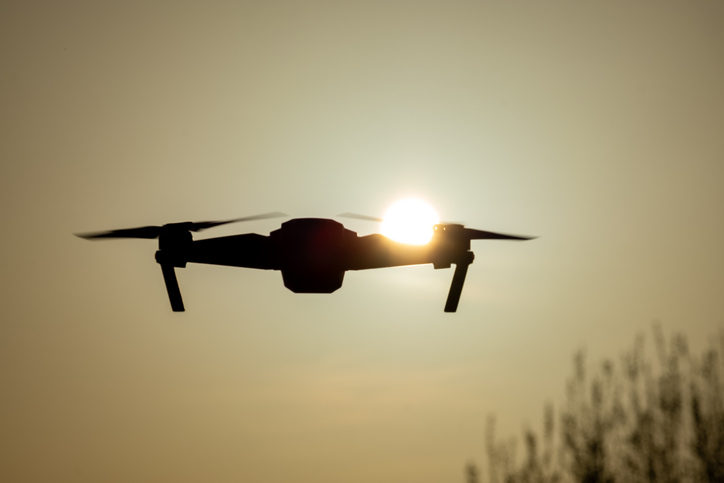
Image Credit: iStock / bjorn999 | Imagery Disclaimer
Securing Tomorrow: Your Daily Dose of Cyber Safety, Tech Trends, National Security News, and Inspiration.
“This is a universe that does not favor the timid.”
-Socrates
I. National Security: Key developments in national security, particularly cyber and technological warfare.
-
Inside Anduril’s Bolt-M Kamikaze Drone Program
-
II. Tech Trends: Updates on emerging technology trends shaping the digital world.
-
Report: Apple plans to launch AI-powered wearable pin device as soon as 2027
-
III. Inspiration: Articles centered on faith that offer guidance and reflection.
-
Chris Pratt Declares AI ‘Cannot Be God’ and ‘Will Always Be Limited’
- Chris Pratt told the Associated Press that AI, being a human creation, will always be flawed and can never replace God, emphasizing that its limits mirror humanity’s own imperfections; while promoting his new film Mercy—where a detective must prove his innocence before an AI judge condemns him—Pratt said he’s cautiously optimistic about AI as a useful tool but worries about its influence on his children, who he keeps away from phones, social media, and screens; he also reiterated his Christian faith, explaining that he will speak openly about Jesus despite potential career risks because raising his four kids with a strong spiritual foundation matters most to him. Click here to read more.
IV. Cyber Safety: A focus on the latest cybersecurity threats, tips, or breaches impacting individuals and organizations.
-
The Upside Down is Real: What Stranger Things Teaches Us About Modern Cybersecurity
- Stranger Things’ final season serves as a vivid metaphor for modern cybersecurity, illustrating how hidden “portals” like unmanaged IoT devices, third‑party cloud links, and legacy OT systems expand an organization’s attack surface and let adversaries slip from the dark web into critical networks; the show’s emphasis on visibility—Joyce’s Christmas‑light signal and the kids’ maps—mirrors the need for continuous, real‑time asset intelligence, risk scoring, and threat analysis, while the heroes’ shift from reactive to proactive tactics reflects best practices such as prioritizing remediation, segmenting vulnerable environments, and iteratively managing risk; ultimately, the series underscores that defeating sophisticated threats requires coordinated teamwork across IT, OT, security, and business leaders, sustained vigilance, and a proactive stance to keep the digital world from descending into an “Upside Down.” Click here to read more.
V. Shield of Israel: Coverage from The Jerusalem Post, providing an Israeli perspective on ongoing conflicts.
-
Israel bets on quantum technology as the computing arms race heats up
-